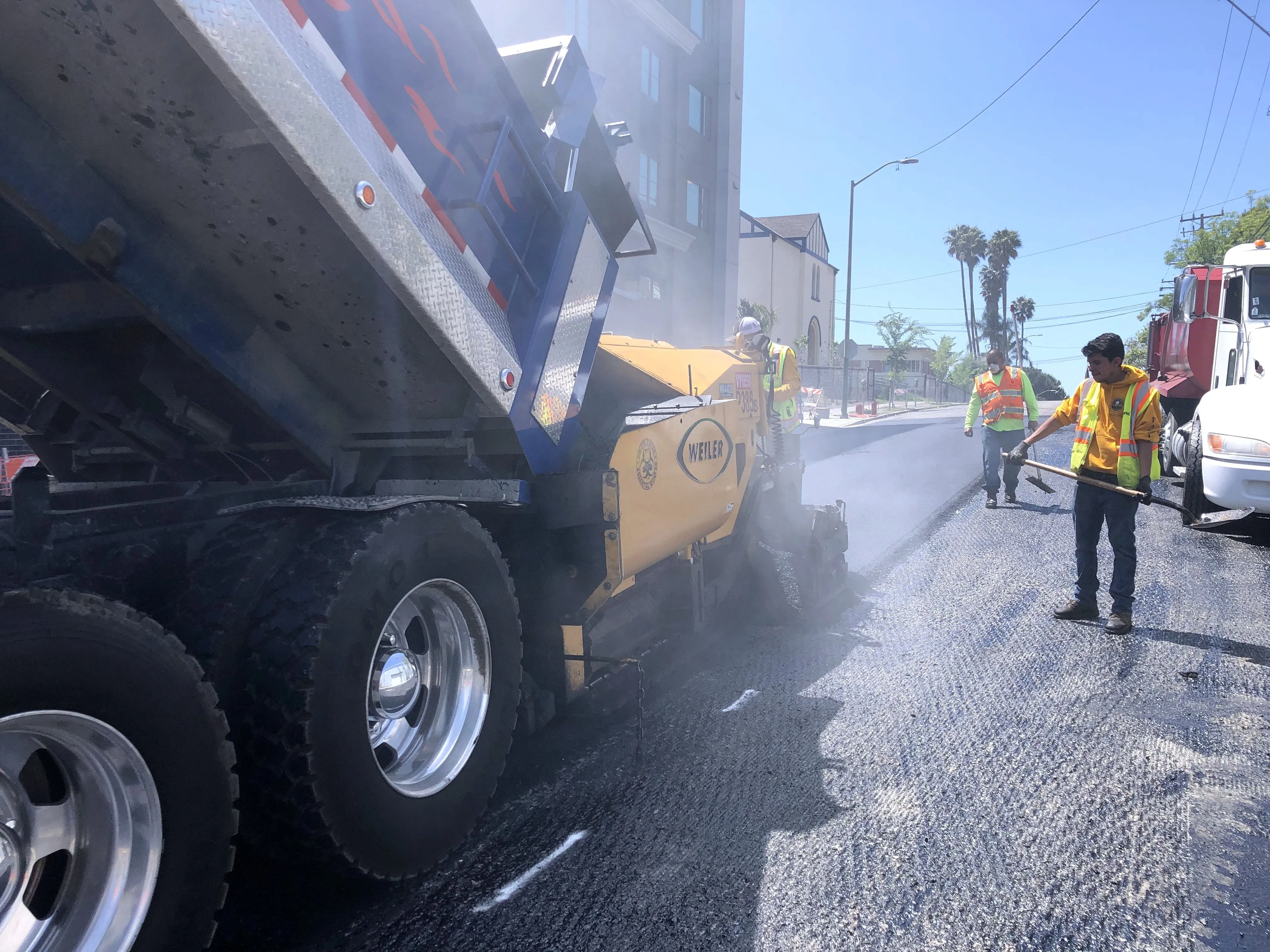
Hot-mix asphalt being fed to the paver during a commercial parking lot resurfacing.

Asphalt

Asphalt resurfacing and overlays

A new asphalt surface for a worn or cracked lot whose base is still sound, at a lower cost than rebuilding.

In brief

Resurfacing puts a new asphalt surface on pavement whose base is still sound. An overlay adds new asphalt on top; grind and pave first mills off the top layer, commonly 2 in, so the finished surface stays at its existing level at gutters and doorways. If the base has failed, those areas are rebuilt first, and widespread failure means replacement instead.

On this page
  1. 01The basics
    1. Grind and pave versus overlay
    2. Asphalt milling
  2. 02Is it the right fix?
    1. Resurfacing, seal coating or replacement?
  3. 03How the work is done
    1. How resurfacing is done
  4. 04Planning and cost
    1. Typical resurfacing cost
    2. What drives resurfacing cost
    3. How long resurfacing takes, and keeping your property open
    4. Accessibility and permits
  5. 05Making it last
    1. How long resurfacing lasts

01

The basics

Grind and pave versus overlay

An overlay places new asphalt on top of the existing surface. It costs less, but it raises the finished level, which matters wherever the pavement meets a gutter, door threshold, entry apron or accessible route.

Grind and pave mills off the existing surface, commonly 2 in, and replaces it, so the finished level stays where it was. That's why we recommend grind and pave on most commercial lots and city streets.
Milling machine grinding the existing asphalt surface to 2 inches before repaving.

Asphalt milling

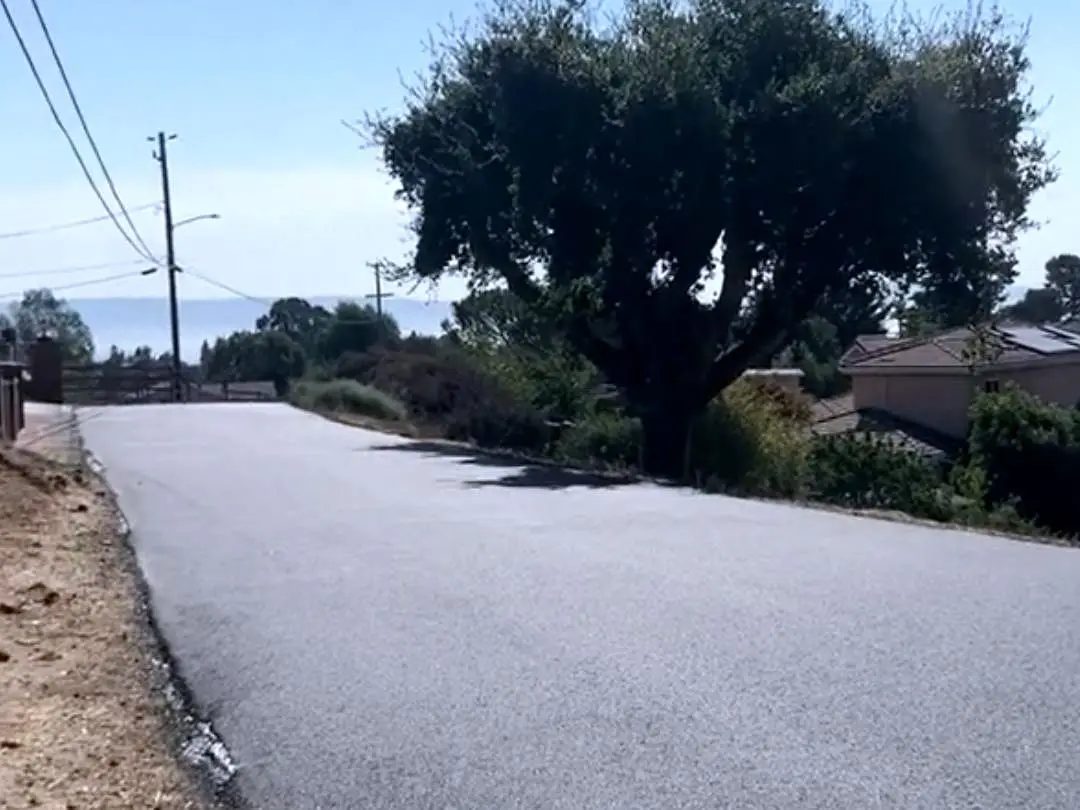
A milling machine grinds the surface to a set depth and loads the millings into trucks for recycling. Milling the full width removes the old joints and seams that make a patched surface bumpy. At Arbutus and Quercus Court in Hayward, we milled both roads 100 percent to 2 in before repaving. Even on an overlay, we mill a strip along the gutters so the new asphalt ends at full thickness.

02

Is it the right fix?

Resurfacing, seal coating or replacement?

The right choice depends on the condition of the base, not the age of the lot.

  • Seal coat. A protective coating on sound pavement that adds no strength.
  • Resurfacing. New asphalt over a sound base, replacing a worn or cracked surface.
  • Removal and replacement. A full rebuild where the base has failed.

03

How the work is done

How resurfacing is done

Failed areas are dug out and rebuilt to full depth first, because paving over a failed base brings the cracks straight back. Then the surface is milled, cleaned and tack coated, new asphalt is placed and compacted, and manholes and valve boxes are raised to the new grade.

An overlay can also fix drainage. At Marin Lagoon in San Rafael, we placed 1,400 SF of 1.5 in overlay to lift low spots that were holding water, along with 43,000 SF of full-depth repairs.

04

Planning and cost

Typical resurfacing cost

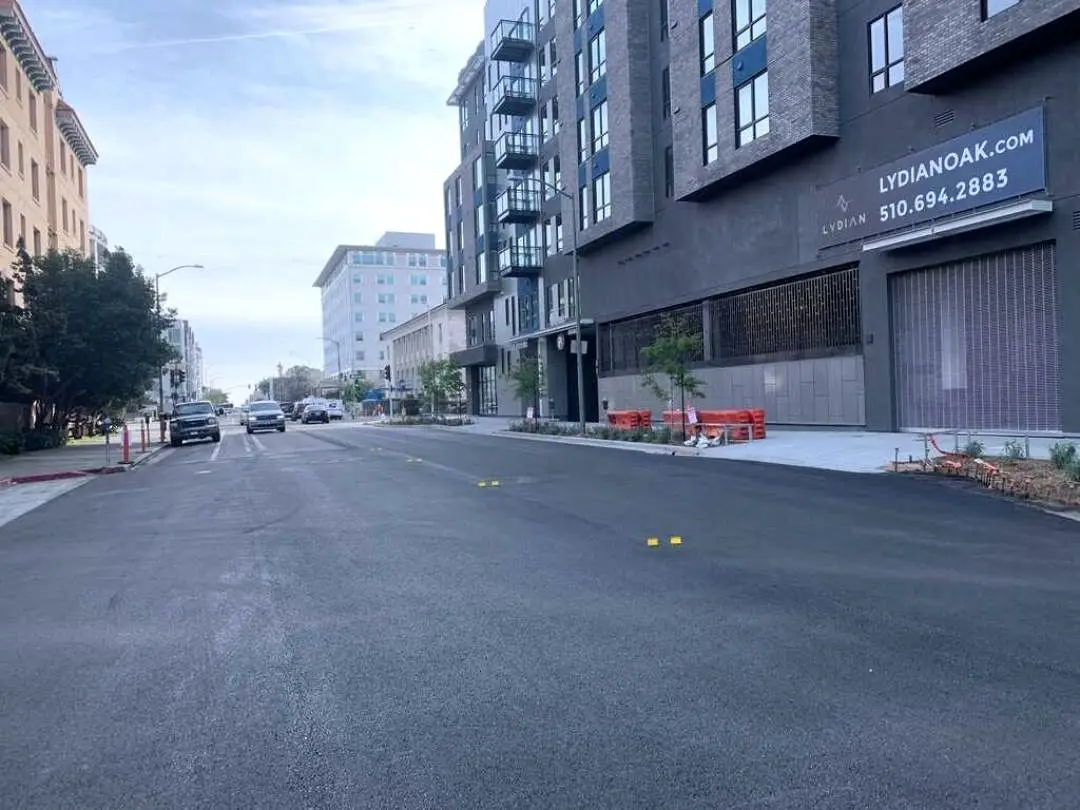
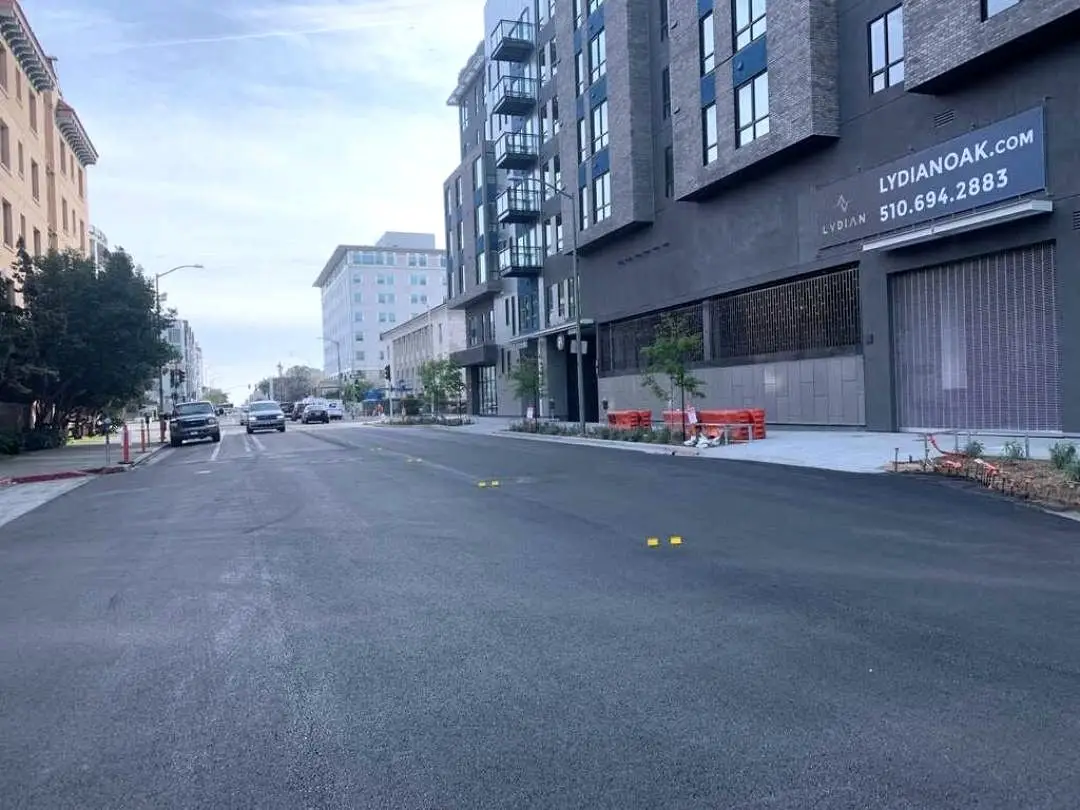
On our published grind and pave projects, all completed in 2021 and all milled and repaved at 2 in, the contract came to about $1.75 to $4 per square foot. Two Hayward Hills streets at Arbutus and Quercus Court, 72,000 SF milled full width, came to $126,235, about $1.75/SF. The 112,800 SF parking lot at Rancho Cotati Shopping Center came to $309,100, about $2.74/SF. Four City of Oakland streets at 226 13th Street, 35,350 SF with thermoplastic markings and a city phasing plan, came to $139,800, about $3.95/SF.

All three were the same depth, and the price per square foot still more than doubled from one to the next. Where a job falls in the range depends on the factors below. Asphalt and fuel costs have also gone up since these jobs were priced, so a bid today will usually come in higher. Treat the range as a guide, not a quote.

What drives resurfacing cost

Resurfacing is priced by area, but the total depends on what else your pavement needs.

  • The area, and whether it is one open lot or many small sections
  • Mill depth and new asphalt thickness
  • How many full-depth repairs are needed first
  • Utility covers and drain inlets to adjust
  • Phasing, after-hours work and traffic control
  • Restriping and accessibility work

How long resurfacing takes, and keeping your property open

Phasing, not paving speed, usually sets the schedule. At Rancho Cotati Shopping Center, we ground and repaved 112,800 SF in eight days while the center stayed open. Around 226 13th Street in Oakland, we resurfaced four city streets, 35,350 SF, in four days under City of Oakland DOT requirements. Most resurfacing happens between spring and early fall, when it's dry and warm enough to pave.

Accessibility and permits

Resurfacing can trigger accessibility updates. Confirm requirements with your city or building department before work starts; see ADA improvements. Work in a public street usually needs an encroachment permit and a traffic control plan.

05

Making it last

How long resurfacing lasts

There's no set number. It depends on the base, the new asphalt thickness, drainage, traffic and maintenance. Crack sealing and seal coat every three to five years help you get the most out of it.

Specification

How we build it

The details that decide service life, stated plainly so they can be compared against any other proposal you receive.

Typical mill depth
2 in is common for commercial lots and city streets.
Level preservation
Grind and pave keeps the finished surface at its existing level.
Edge keying
Overlays milled along gutters and existing pavement so new asphalt ends at full thickness, not thinned out.
Tack coat
Applied to the cleaned surface before paving so new asphalt bonds to the old.
Pre-work repairs
Base failures rebuilt to full depth before any resurfacing.

Questions

Resurfacing & Overlays FAQs

Overlay or grind and pave: which do we need?

If raising the surface would cause a problem at gutters, doorways or accessible routes, grind and pave. If the level can rise and the base is sound, an overlay may be enough and cost less.

Can you put new asphalt over old asphalt?

Yes, as long as the old pavement is structurally sound. Failed areas need to be rebuilt first, or the new asphalt will crack in the same pattern within a few seasons.

How long does resurfacing take?

To give you an idea: 112,800 SF of grind and pave at Rancho Cotati Shopping Center took eight days while the center stayed open.

How thick is an asphalt overlay?

It depends on the traffic and the existing surface. For commercial lots and city streets, 2 in is a common mill-and-pave depth; overlays used to fix low spots can be thinner.

Does the striping have to be redone?

Yes. Resurfacing covers the existing layout, which makes it a good time to review stall counts, traffic flow and accessible stall placement.

Get started

Need asphalt resurfacing and overlays?

Send the property address and what you are seeing. An estimator will walk the site and tell you whether this is the right scope before quoting it.