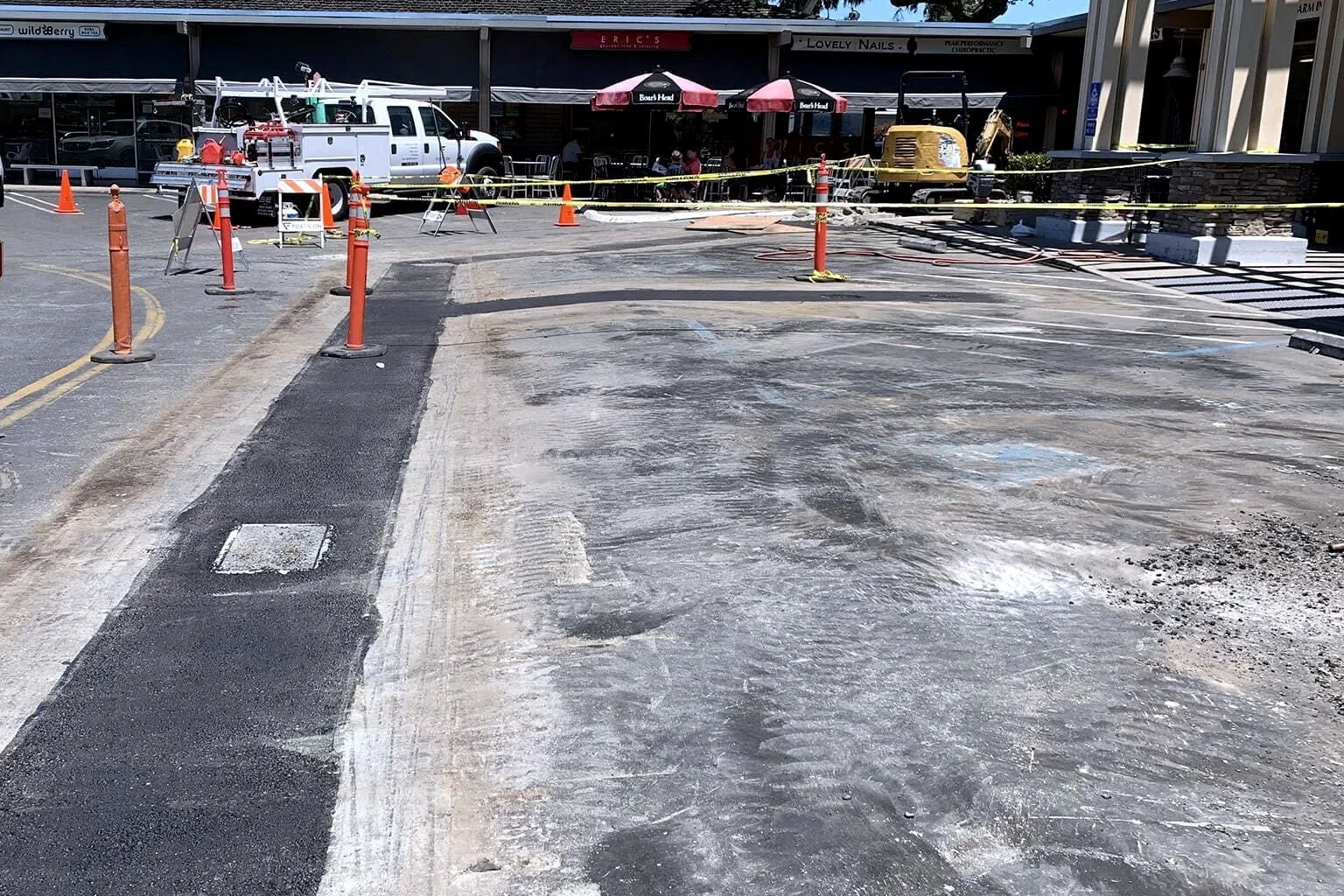
Trench patch repair being prepared and paved on a Bay Area commercial site.

Asphalt

Commercial asphalt repair

Potholes, failed areas and sunken trench lines cut out and rebuilt, base included, so the same spot doesn't fail again.

In brief

Asphalt repairs keep pavement in good condition between resurfacing or full rebuilds. They range from cheap, temporary skin patches that even out depressions and help drainage to localized full-depth removal and replacement that properly fixes a pothole. When water gets past the surface and softens or washes out the base, a pothole is born. We sawcut a box with clean, straight edges, remove the asphalt and repair the base, compact it, tack coat the edges and place hot mix asphalt in a lift or two.

On this page
  1. 01The basics
    1. Pothole repair on a commercial property
    2. Where parking lots fail first
  2. 02Is it the right fix?
    1. Repair, overlay or replace?
  3. 03How the work is done
    1. How a full-depth repair is done
    2. Trench patch paving
  4. 04Planning and cost
    1. Typical cost of asphalt repair
    2. What drives the cost of asphalt repair
    3. Weather, timing and when you can drive on it

01

The basics

Pothole repair on a commercial property

Most potholes start as an unsealed crack, which makes crack sealing the cheapest way to prevent them. Once a hole opens, filling it with cold mix leaves the soft base underneath, so the same hole often opens up again soon after.

On a parking lot, a pothole near an entrance, crosswalk or accessible route is a trip hazard as well as a tire problem. We usually make it safe right away, then schedule a permanent repair along with any other failed areas, which costs less than fixing one hole at a time.
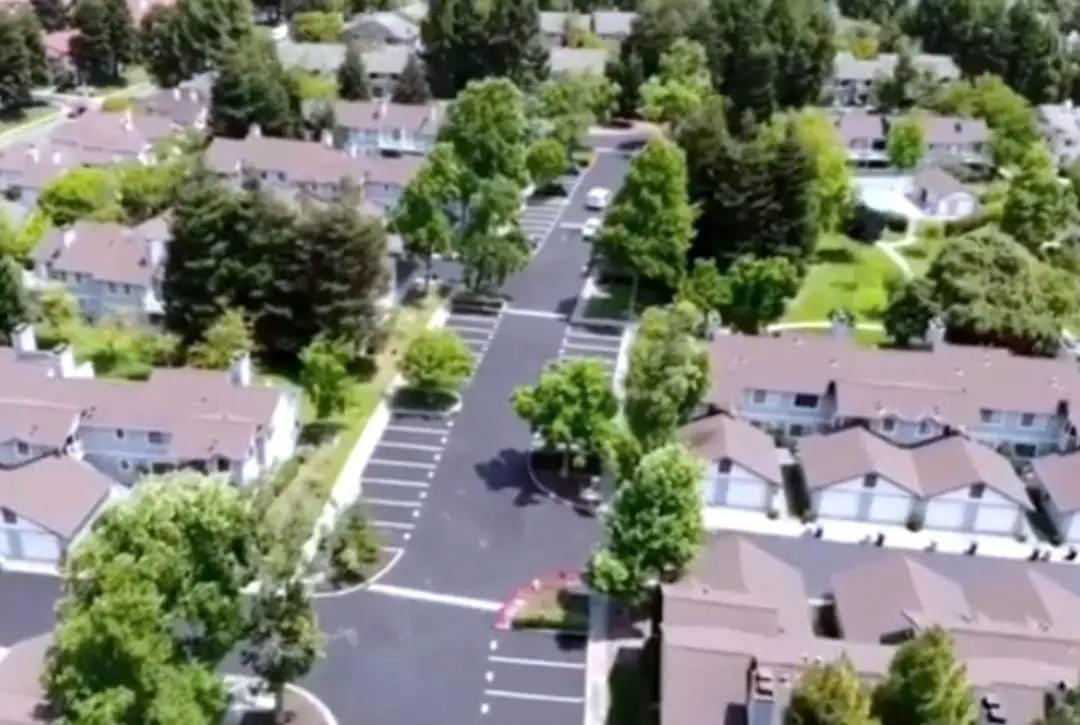
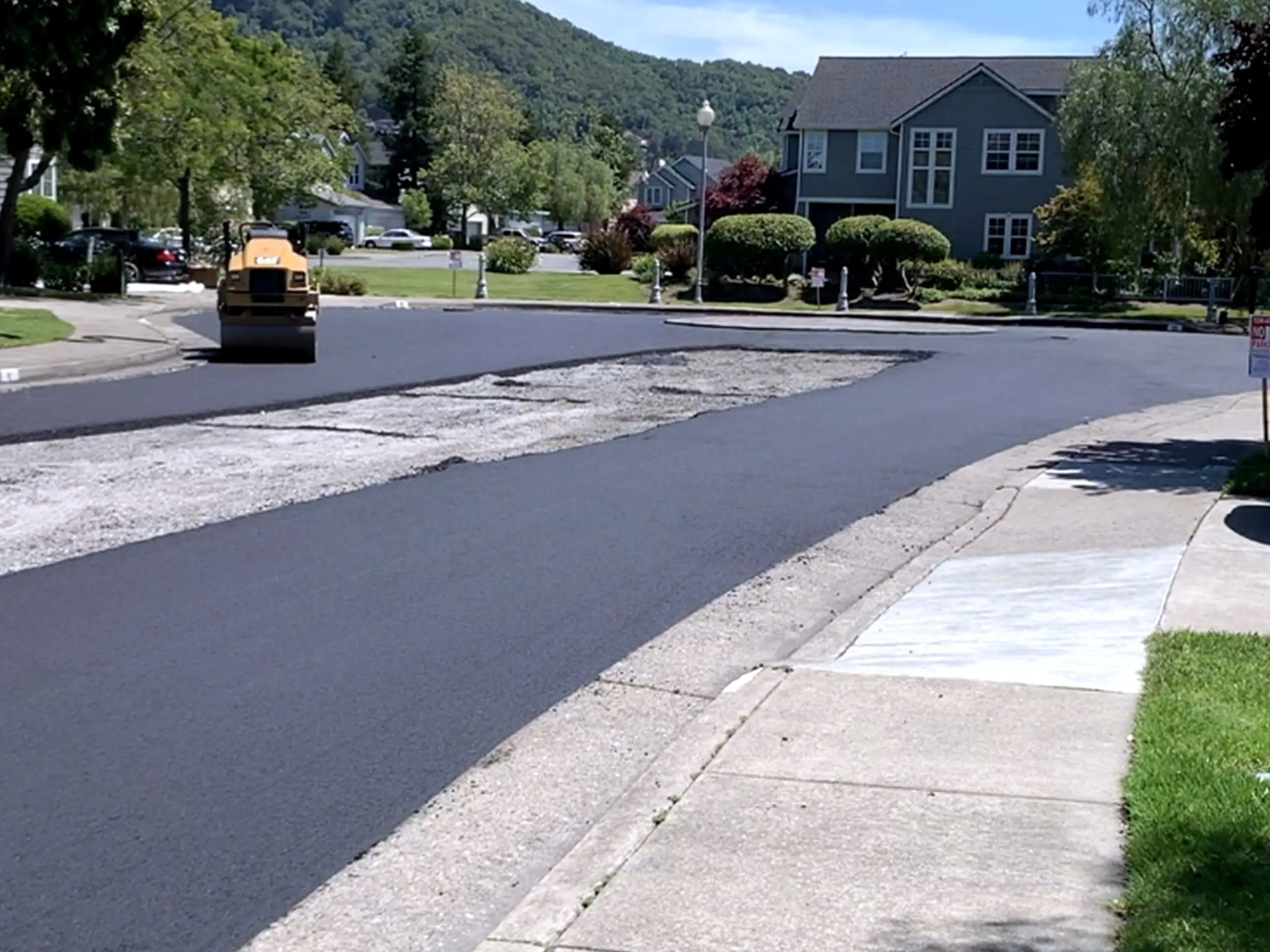
Where parking lots fail first

Most parking lot repair comes down to a few trouble spots rather than the whole lot.

  • Dumpster enclosures and trash truck approaches, where a concrete pad is often the better long-term answer
  • Drive aisles at entrances, where every vehicle brakes and turns
  • Low spots and areas around catch basins, where the base stays wet
  • Utility cuts and old trench lines

02

Is it the right fix?

Repair, overlay or replace?

Repair is the right choice when the damage is in a few spots and the pavement around it is sound. When the surface is worn across most of the lot but the base still holds, an overlay is usually better value. When the base is failing across the site, removal and replacement costs less than repairing it over and over.

03

How the work is done

How a full-depth repair is done

Cold patch is fine for making a hole safe the same day, but it doesn't compact or bond like hot mix and won't last on a commercial lot. A permanent repair goes in these steps:

  • Mark the failed area with a margin into sound pavement
  • Sawcut the edges square and straight down
  • Dig out the failed asphalt and rebuild any soft base
  • Tack the edges, then place and compact hot mix asphalt
  • Reopen once the asphalt has cooled and firmed up

Trench patch paving

After utility work, a trench usually gets a quick temporary patch. When a trench line sinks or cracks, the cause is almost always backfill that wasn't compacted. We rebuild and compact the trench section, then pave it to match the grade of the pavement around it.

04

Planning and cost

Typical cost of asphalt repair

On our two published repair programs, completed in 2020 and 2022 and both with 4 in full-depth repairs, the contract came to about $4.10 per square foot of repair. At The Crossings HOA in Fremont, 34,500 SF of repairs followed by seal coat, stall striping, stall stenciling and red curb came to $140,000, about $4.06/SF. At Marin Lagoon in San Rafael, 43,000 SF of 4 in repairs and 1,400 SF of 1.5 in overlay, plus concrete repairs, came to $183,400, about $4.13/SF.

Both were large programs on one property, and both prices include the work that followed the repairs. Asphalt and fuel costs have also gone up since these jobs were priced, so a bid today will usually come in higher. Treat these numbers as a guide, not a quote.

What drives the cost of asphalt repair

We measure and list every repair area in the proposal rather than writing "as required," so you get a number you can approve and check.

  • Total repair area, and whether it is a few large areas or many small ones (small patches cost more per square foot, since the crew, equipment and trucking cost the same)
  • Repair depth, and how much base has to be replaced
  • Access, phasing and working hours on an occupied property
  • Haul-off and traffic control; permit fees for street work are not included in our proposals
  • Striping that has to be put back over repaired areas

Weather, timing and when you can drive on it

Hot mix can't go down in the rain or on a wet base, so permanent repairs are usually scheduled for the dry season, with cold patch keeping things safe in between. A hot mix repair can usually take traffic the same day, once it has cooled. Because repairs are in specific spots, we can phase them so most of the property stays in use.

Specification

How we build it

The details that decide service life, stated plainly so they can be compared against any other proposal you receive.

Dig-out depth
Commonly 4 in in parking areas; deeper where traffic or base condition calls for it.
Edges
Sawcut straight down, so the repair locks against sound pavement instead of thinning out.
Base
Repaired or replaced within the dig-out, never assumed to be in good shape.
Material
Hot mix asphalt for permanent repairs; cold patch generally treated as temporary.
Trench repairs
The trench section is rebuilt and compacted, not just resurfaced.

Questions

Asphalt Repair FAQs

Why does our pothole keep coming back?

Usually because the hole was filled but the cause wasn't fixed. Unless the soft base underneath is removed and rebuilt, and water is kept out, the same spot will break up again.

What is the difference between asphalt patching and asphalt repair?

A patch usually means filling or covering a damaged spot. A repair means cutting out the failed section and rebuilding it, base included. Patching costs less up front; a full-depth repair lasts longer.

How much does asphalt repair cost?

It depends on the total area, repair depth, base condition, how many separate spots there are, and access. Many small scattered patches cost more per square foot than a few larger areas.

Is cold patch a permanent fix?

Not on a commercial lot. It's good for making a hole safe quickly, especially in wet weather, but plan on a permanent hot mix repair to follow.

Do you repair concrete as well?

Yes. We also handle concrete repair, such as trip hazards, sunken panels, curbs and sidewalks, so you don't need two contractors.

Get started

Need commercial asphalt repair?

Send the property address and what you are seeing. An estimator will walk the site and tell you whether this is the right scope before quoting it.