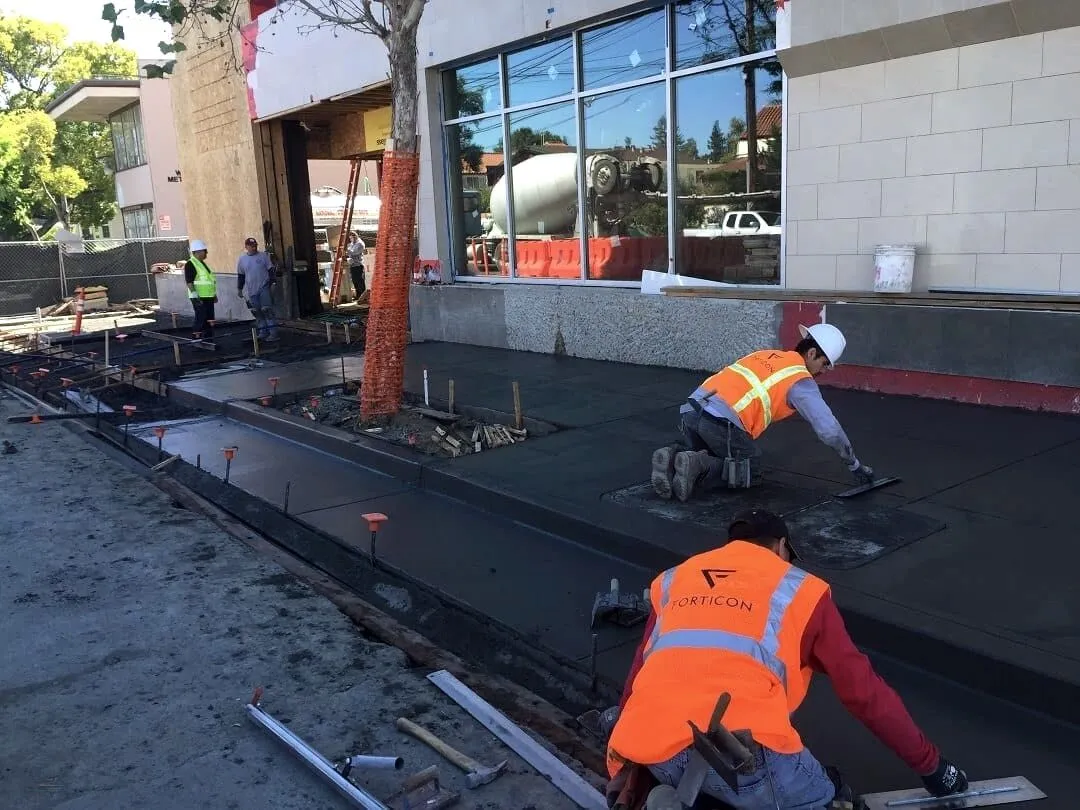
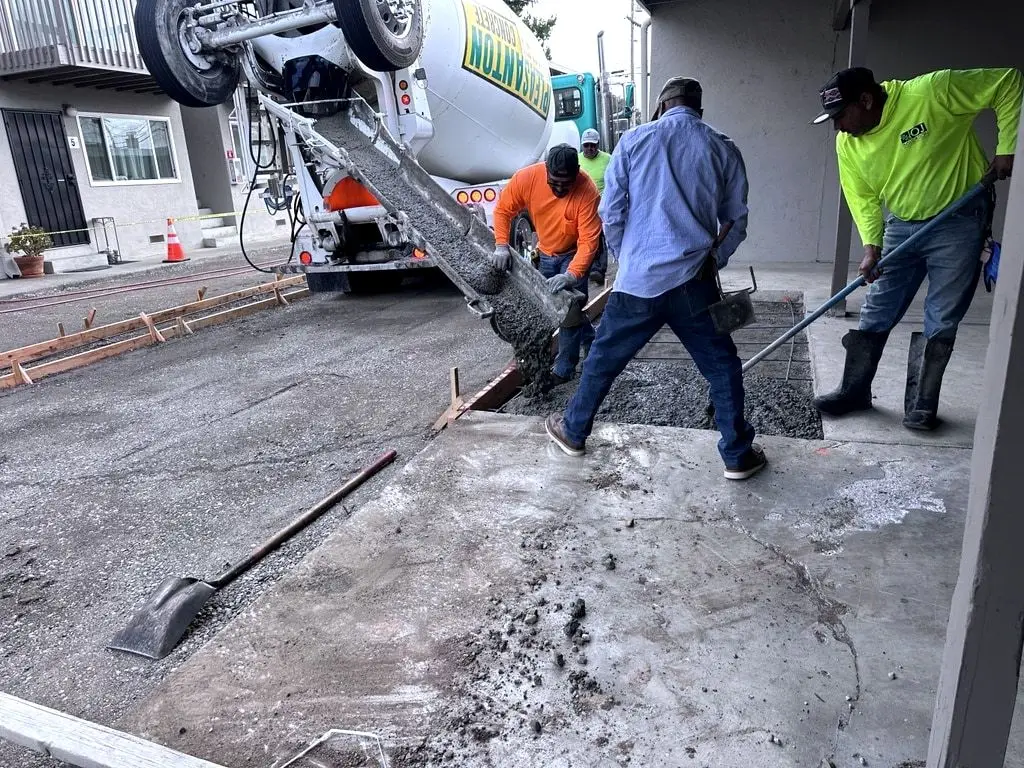
A Forticon crew placing and finishing a commercial concrete sidewalk section.

Concrete

Commercial concrete contractor for sitework

Curb, gutter, valley gutter, sidewalks, driveway approaches, and concrete parking and ADA stalls, built to carry traffic and move water where it should go.

In brief

Commercial concrete sitework covers curb, gutter, valley gutter, sidewalks and driveway approaches: the elements that control where vehicles go and where water drains. Standing water from failed curb or gutter is a common cause of asphalt failure, so fixing drainage is often less costly than repeatedly repairing the pavement. Forticon handles both the concrete and the asphalt.

On this page
  1. 01What we build
    1. What a commercial concrete contractor builds
    2. Curb, gutter and valley gutter
    3. Concrete sidewalks, walkways and flatwork
    4. Driveway approaches
  2. 02How the work is done
    1. Drainage, grades and the public right-of-way
    2. Curing time and when concrete can take traffic
  3. 03Planning and cost
    1. What affects the cost of commercial concrete work
    2. Concrete and asphalt on the same site

01

What we build

What a commercial concrete contractor builds

On a parking lot, business park or apartment community, the concrete work is the site concrete around and through your pavement: the pieces that hold the asphalt edge, move water away and get people from their cars to the door. When one stops doing its job, the asphalt next to it is usually the first thing to show it.

  • Curb and gutter along drive aisles, islands and the property edge
  • Valley gutter carrying runoff across drive aisles
  • Sidewalks and walkways between parking, entrances and the street
  • Driveway approaches connecting the property to the street
  • Concrete parking stalls, including ADA stalls and access aisles poured to the required slope
  • Accessible curb ramps and path-of-travel concrete
Curb, gutter and valley gutter

Curb and gutter collects runoff from the pavement and carries it to the drains. When a gutter settles or breaks, water sits against the asphalt edge, soaks into the base and the pavement beside it starts to fail. Valley gutter carries water across a drive aisle without a raised curb in the way.

Barrier curb is used where vehicles shouldn't cross, rolled curb where they can, and integral curb and gutter is poured as one piece. On the street frontage, the city standard usually decides the profile.

A mixer truck chute pouring concrete into forms while three workers spread it by hand.

Concrete sidewalks, walkways and flatwork

On flatwork, the finish, joints and slope decide whether a walkway drains, stays flat and stays free of trip hazards. We place joints so the slab cracks where it's meant to, give it enough slope to shed water within accessible cross-slope limits, and use a broom finish for slip resistance.

Driveway approaches

The driveway approach is the concrete between the street and your property. Every vehicle crosses it, often at an angle and over a change in grade, so approaches tend to wear out before the parking lot does. They're almost always in the public right-of-way, so they need a city permit and are built to the city's standard plan.

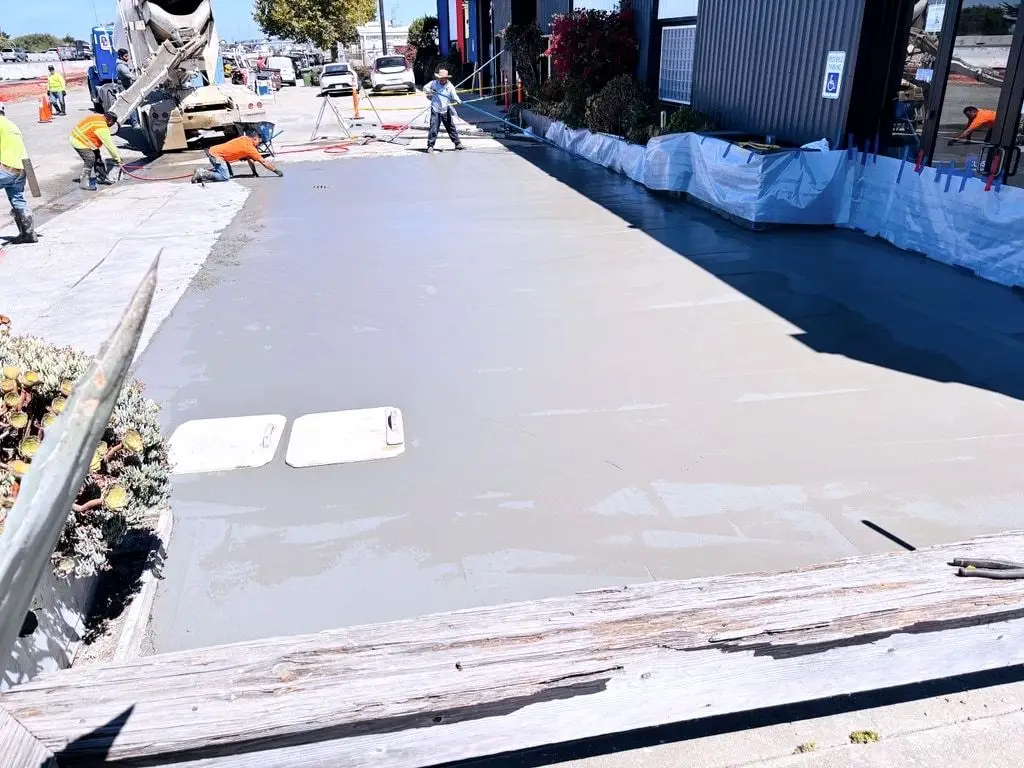
A freshly placed concrete slab being finished beside a mixer truck at a commercial site.

02

How the work is done

Drainage, grades and the public right-of-way

Many concrete problems are really drainage problems: a gutter with a low spot, a walkway without enough slope, an approach that tips water toward the building. We set lines and grades before anything is poured, so the new work drains to the right place and meets the existing pavement flush. Sidewalk, curb and approach work along the street needs a city permit and inspection.

Curing time and when concrete can take traffic

Concrete gains strength for weeks. A new sidewalk can usually take foot traffic within a day or two; cars and trucks need longer. We set hold times for each job and phase the work, one entrance or one run of curb at a time, so the property keeps working.

03

Planning and cost

What affects the cost of commercial concrete work

We price concrete from a site visit, not a rate card.

  • Quantity, and whether it's one continuous run or many small areas
  • Demolition and haul-off of existing concrete and asphalt
  • Subgrade condition and base replacement
  • Inspections and traffic control in the right-of-way (permit fees are not included in our proposals)
  • Asphalt patch-back where new concrete meets existing pavement

Concrete and asphalt on the same site

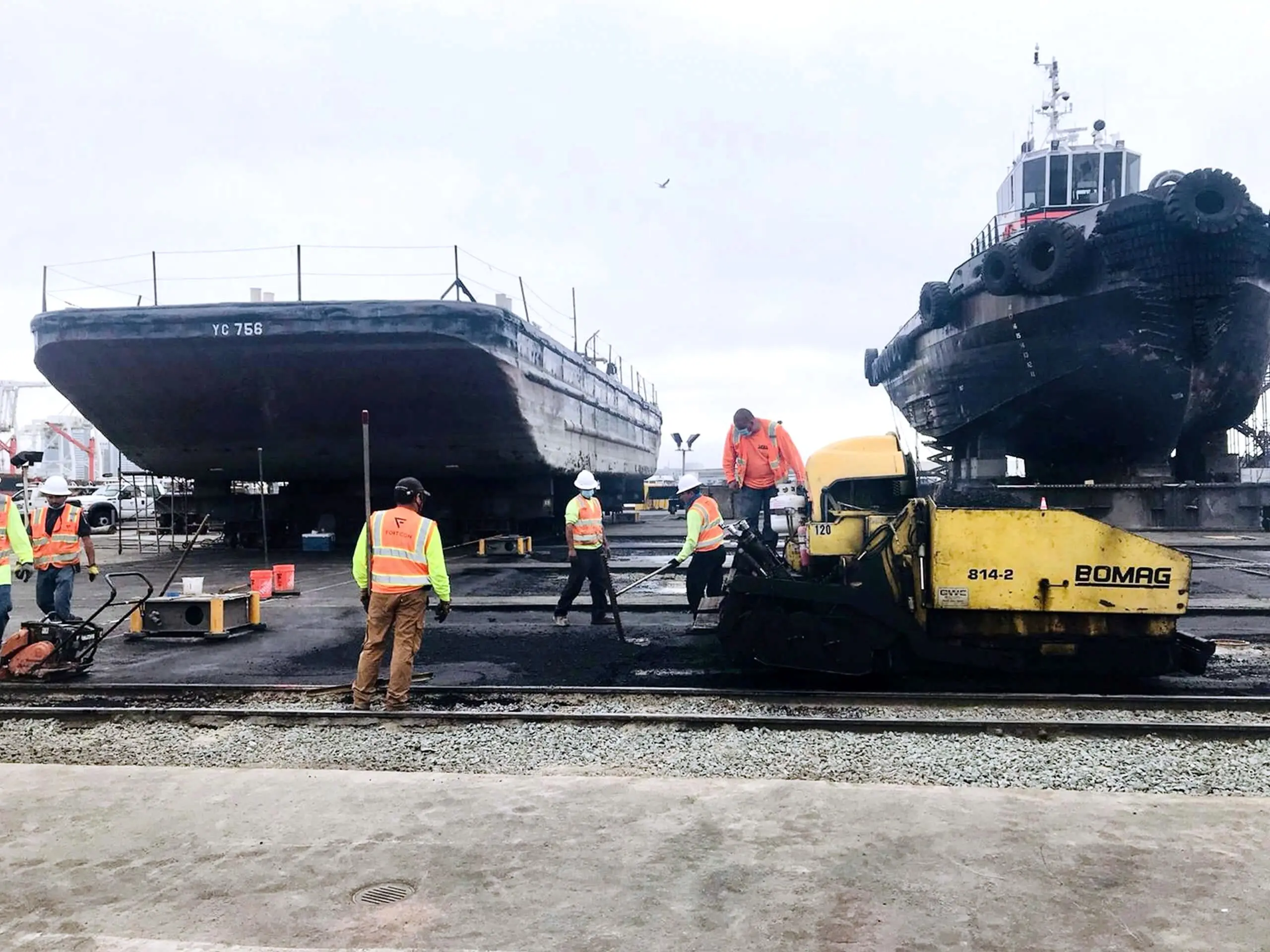
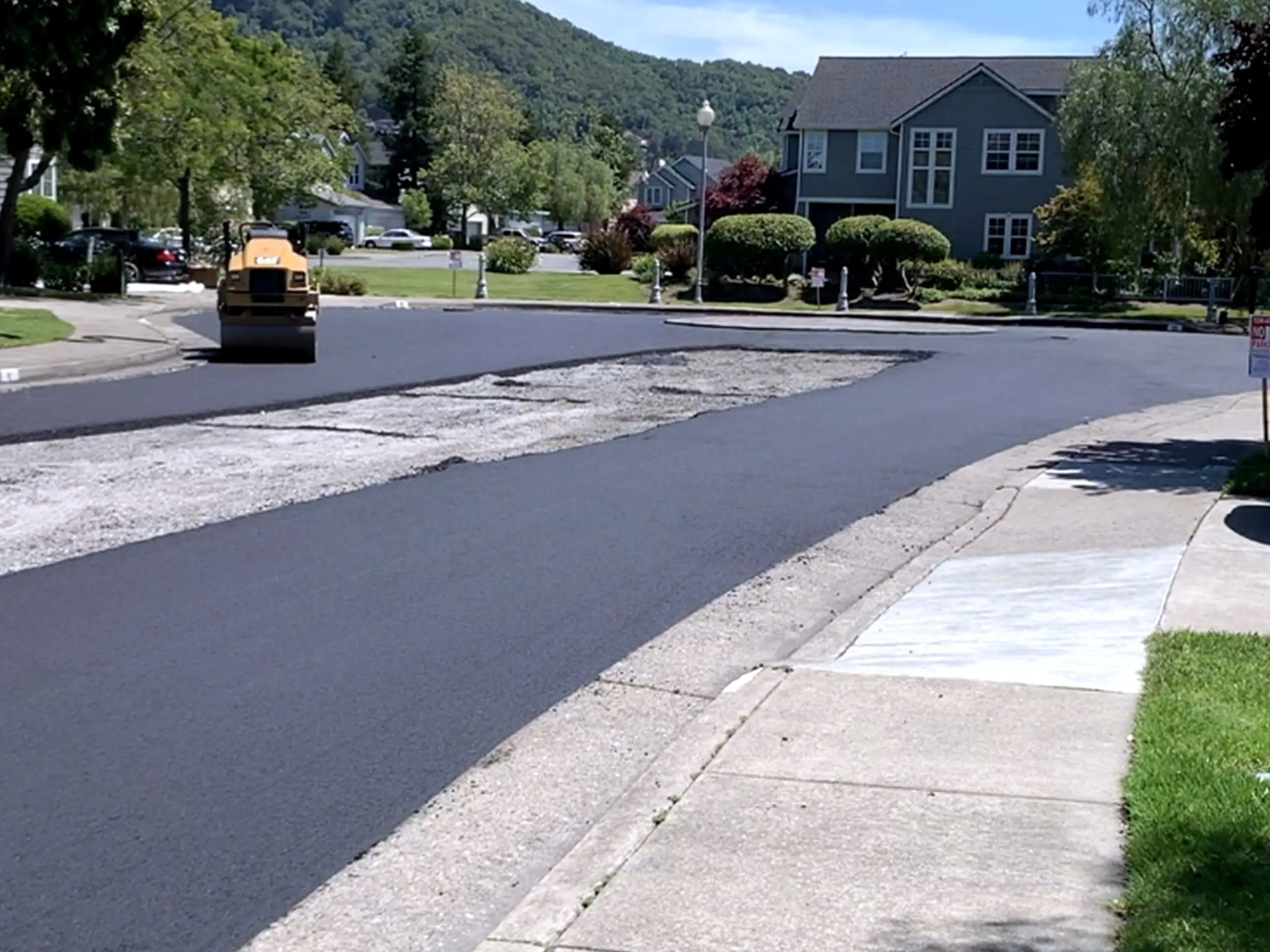
Where concrete meets asphalt is where problems tend to show up. Because we do both sides of that joint, you get one team responsible for the whole job, one schedule and one mobilization instead of two.

Specification

How we build it

The details that decide service life, stated plainly so they can be compared against any other proposal you receive.

Curb and gutter
Sized and graded to carry runoff to catch basins rather than pond against the edge.
Jointing
Control joints placed so the slab cracks where intended.
Cross slope
Enough fall to drain, within accessible limits on any path of travel.
Base
Subgrade corrected and base compacted before forms are set.
Finish
Broom finish on exterior walkways for slip resistance, with tooled edges.

Questions

Concrete Sitework FAQs

What does a commercial concrete contractor do?

On an existing property, mostly site concrete: curb and gutter, valley gutter, sidewalks, driveway approaches, parking and ADA stalls, curb ramps and walkway repairs.

What is the difference between a curb and a gutter?

The curb is the raised edge that keeps vehicles where they belong. The gutter is the flat channel at its base that carries water to the drains. Poured together, it's called integral curb and gutter.

Why does our parking lot flood in the same spot every winter?

Usually because a curb, gutter or valley gutter has settled, broken or was never graded correctly. Fixing the drainage often costs less than repairing the pavement it keeps damaging.

Do we need a permit for sidewalk, curb or driveway approach work?

Work in the public right-of-way generally needs a city permit and inspection. Work entirely on private property may or may not, depending on the city.

How long before we can drive on new concrete?

Vehicles need considerably longer than foot traffic. Your project manager will give you hold times for the mix and the conditions.

Get started

Need a commercial concrete contractor for sitework?

Send the property address and what you are seeing. An estimator will walk the site and tell you whether this is the right scope before quoting it.