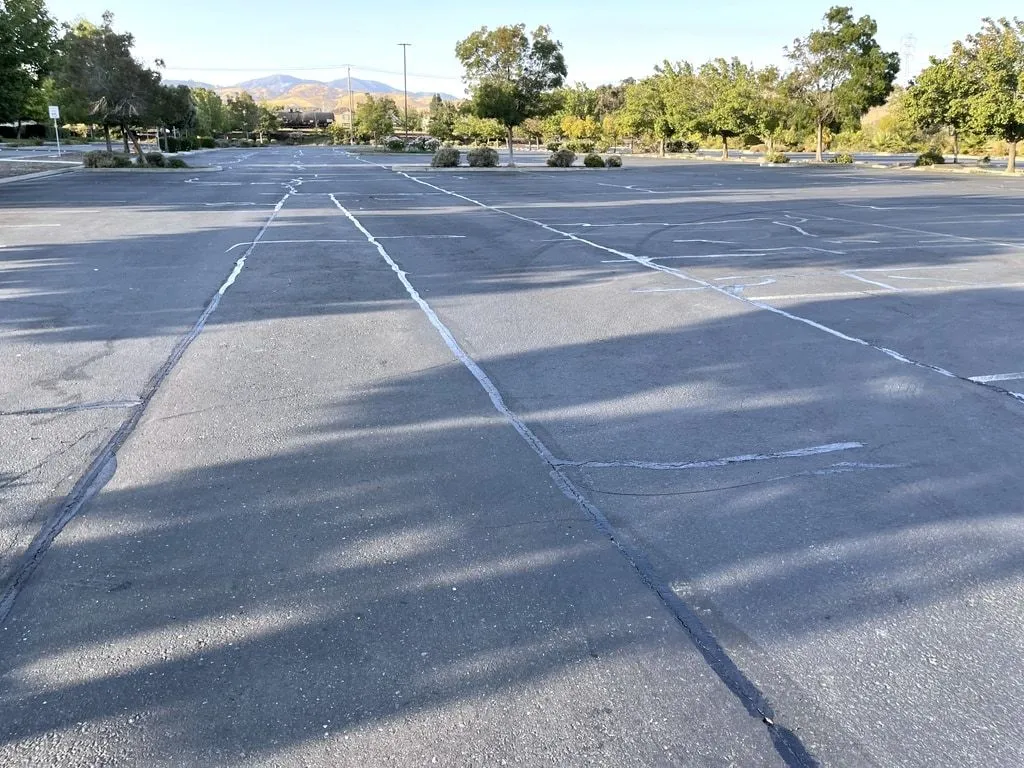
A large commercial parking lot with its cracks filled, the dark sealant lines running across the faded asphalt.

Pavement maintenance

Crack sealing and crack filling

Sealing cracks keeps water out of the base, before a small crack turns into a pothole or a failed area.

In brief

Crack sealing fills cracks in asphalt so water cannot reach and soften the base, which is how small cracks turn into potholes and failed areas. Cracks up to 1/2 in are cleaned, dried and filled with hot or cold sealant. Alligator cracking means the base has already failed and needs full-depth repair. The usual order is repairs, crack seal, seal coat, then striping.

On this page
  1. 01The basics
    1. What crack sealing does
    2. Crack sealing versus crack filling
  2. 02Is it the right fix?
    1. Which cracks are worth sealing
  3. 03How the work is done
    1. The crack sealing process
  4. 04Planning and cost
    1. What drives the cost of crack sealing
    2. Weather and timing
  5. 05Making it last
    1. How often to crack seal

01

The basics

What crack sealing does

The point of crack sealing is to keep water from reaching the base rock through the crack. Water in the base is how a small surface problem turns into a pothole or a failed area.

We clean out the cracks and fill them with hot or cold sealant, depending on the crack and the weather. Linear cracks up to 1/2 in are filled as standard preparation before seal coating.
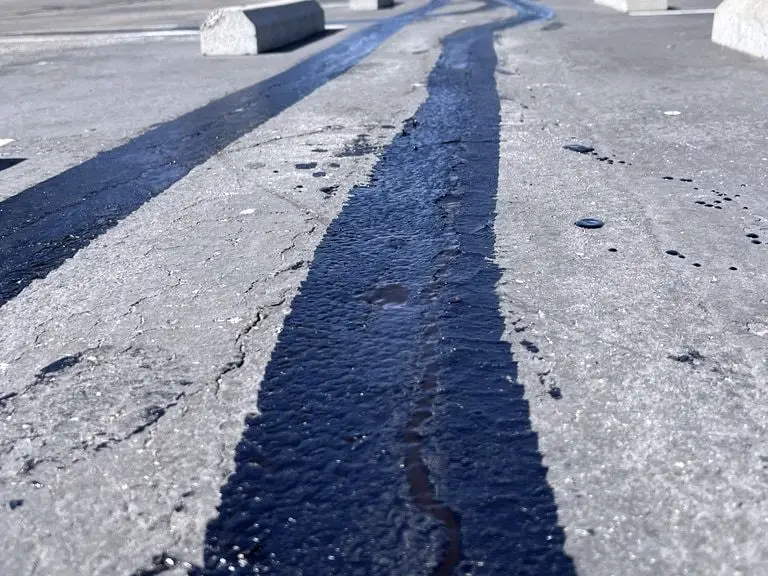
Fresh black sealant bands filling cracks in the gray asphalt of a parking lot.

Crack sealing versus crack filling

The two terms get used interchangeably, but the difference is movement. Crack sealing uses a flexible, usually hot-applied rubberized sealant for cracks that open and close with the temperature. Crack filling uses a less stretchy material for cracks that barely move. When you compare bids, ask what material and prep are included rather than going by the name.

02

Is it the right fix?

Which cracks are worth sealing

Linear cracks, the ones that run in a line across the surface, along a paving joint or an old trench, are the right candidates. Alligator cracking, a web of connected cracks, means the base has already failed. Sealing won't help there; those areas need full-depth repair.

The right order is repair failed areas, seal the cracks, seal coat, then put the striping back. Done out of order, you end up paying for some of the work twice.

03

How the work is done

The crack sealing process

Sealant placed in a dirty or damp crack won't stick, so most of the work is prep. Hot-pour sealant is standard on commercial lots because it bonds well and stays flexible; cold-pour is used on very small jobs with only a few cracks, and narrow cracks.

  • Survey. We mark the cracks and separate out areas that need repair instead.
  • Clean. Dirt, loose material and weeds are blown and brushed out.
  • Dry. The crack has to be dry, or the sealant lets go early.
  • Apply. Sealant is heated to the maker's range and placed in the crack.
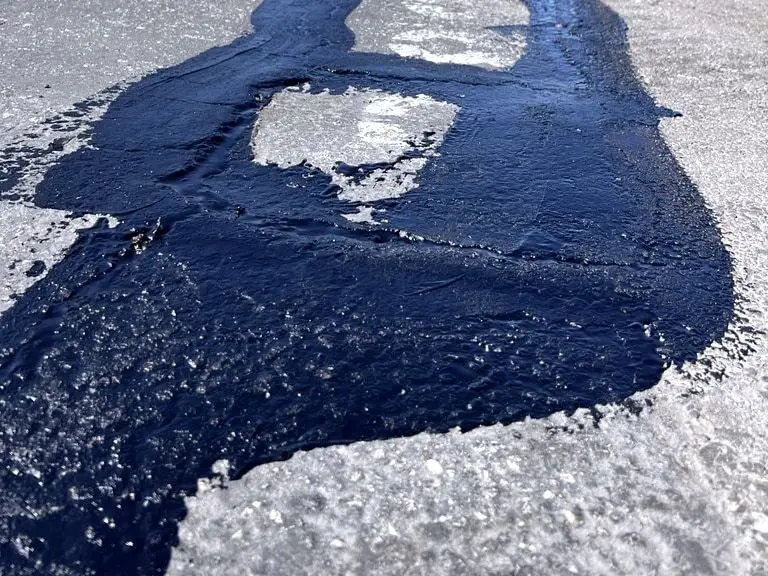
A wide pour of fresh black sealant over cracked, worn pavement.

04

Planning and cost

What drives the cost of crack sealing

Crack sealing is usually priced by the linear foot or as a set price for a defined area.

  • Total linear footage, and how close together the cracks are
  • Crack width and depth
  • How much cleaning the cracks need
  • Hot-pour or cold-pour material
  • Whether it's combined with seal coat and striping in one trip

Weather and timing

Cracks need to be dry and within the sealant's temperature range, so spring and fall are the usual windows. For Bay Area properties, the goal is to have cracks sealed before the rainy season. Hot-applied sealant can usually take traffic shortly after it cools, and crews work along the cracks, so only small sections close at a time.

05

Making it last

How often to crack seal

New cracks open every year as pavement ages, so crack sealing works best as a regular habit. Walk the property each year before the rains, and fold a full round into the seal coat schedule every three to five years, with touch-ups in between.

Specification

How we build it

The details that decide service life, stated plainly so they can be compared against any other proposal you receive.

Crack width
Linear cracks up to 1/2 in are filled with hot or cold crack fill.
Preparation
Cracks cleaned out before filling so the material bonds to the sides.
Moisture
Cracks should be dry when sealed; moisture is a common cause of sealant coming loose.
Not suitable for
Alligator or fatigue cracking, which means base failure and needs full-depth repair.
Sequence
Repairs, then crack seal, then seal coat, then striping.

Questions

Crack Sealing FAQs

What is the difference between crack sealing and crack filling?

Crack sealing uses a flexible, usually hot-applied sealant for cracks that move with the temperature. Crack filling uses a less stretchy material for cracks that don't move much. Check what material and prep a bid includes.

What is the difference between crack sealing and seal coating?

Crack sealing fills individual cracks to keep water out of the base. Seal coating covers the whole surface to protect it from sun, water and oil. They're usually done together, in that order.

Why not just seal coat over the cracks?

Seal coat is a thin surface layer. It fills hairline cracks, but it can't bridge an open crack, so water keeps getting through.

When is the best time of year for crack sealing?

Dry weather with mild temperatures, usually spring or fall. In the Bay Area, the main goal is to have cracks sealed before the rainy season.

How often should a parking lot be crack sealed?

Check every year and seal new cracks as they appear. A full round is normally done right before each seal coat.

Get started

Need crack sealing and crack filling?

Send the property address and what you are seeing. An estimator will walk the site and tell you whether this is the right scope before quoting it.