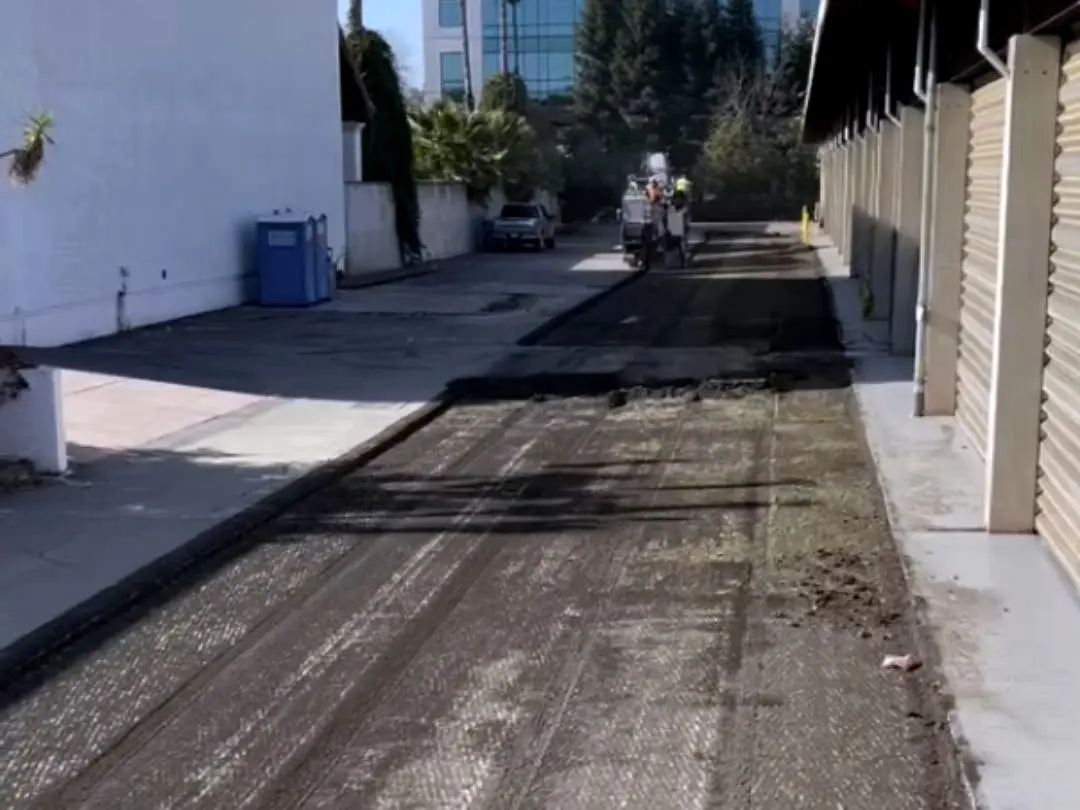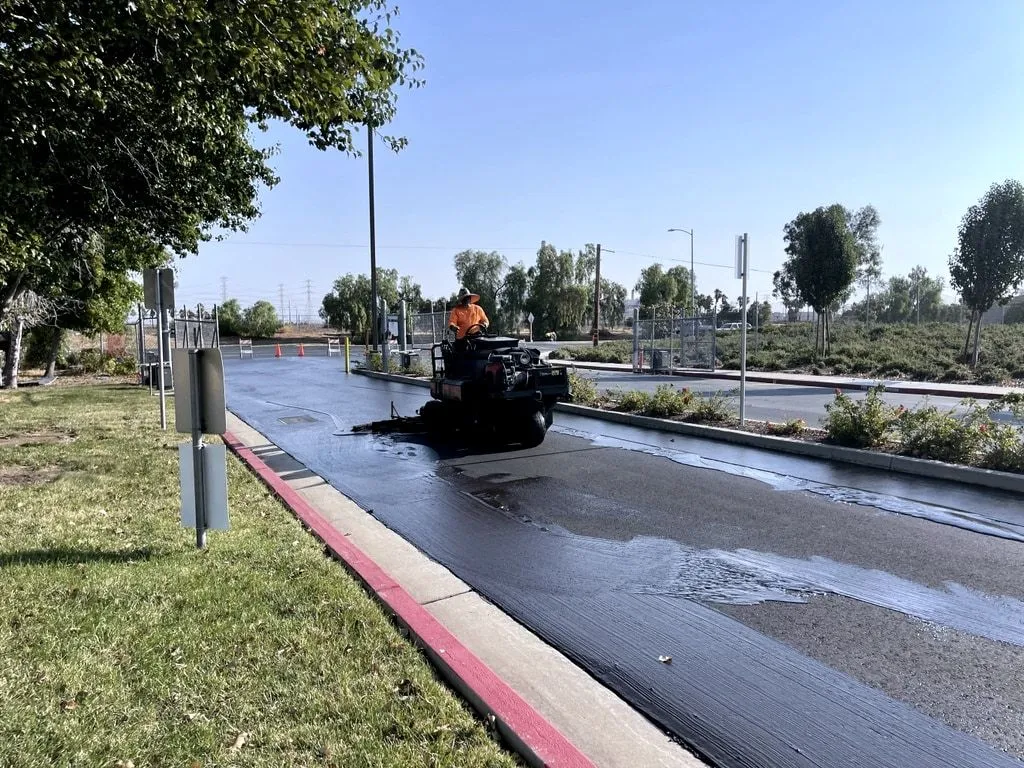
A crew member on a ride-on machine spraying fresh seal coat along a curb in a commercial parking lot.

Pavement maintenance

Commercial sealcoating

Seal coating protects sound asphalt from sun, water and oil, and evens out the color of a patched, faded lot.

In brief

Seal coating is a protective layer applied over sound asphalt to resist water, UV oxidation and oil. Most Bay Area commercial lots need it every 3–5 years. It needs temperatures above about 50°F to cure, and it does not repair potholes or base failure, so repairs come first.

On this page
  1. 01The basics
    1. What seal coating does
    2. Types of sealcoat
  2. 02Is it the right fix?
    1. When sealcoating isn't enough
  3. 03How the work is done
    1. How we seal coat a parking lot
  4. 04Planning and cost
    1. Drying time, curing time and rain
    2. What drives the cost of sealcoating
    3. Sealcoating an occupied property
  5. 05Making it last
    1. Seal coating in your maintenance plan

01

The basics

What seal coating does

Asphalt is held together by a binder. Sun dries it out and water washes fine material out of the surface, which is why old asphalt turns gray, gets rough and eventually comes apart into loose stones.

A seal coat takes that wear instead of the asphalt underneath, and it evens out the color of a lot that has been patched over the years. It protects against four things:

  • Sun. UV hardens the binder until the pavement cracks instead of flexing. Open areas facing south and west go gray first.
  • Water. Through cracks and a porous surface it reaches the base, and a soaked base is where potholes and full-depth failures start.
  • Oil and fuel. They soften the binder, which is why asphalt breaks down first in delivery bays and the stalls where vehicles idle. On a sealed surface, spills sit on top and can be cleaned up.
  • Tire wear. Turning tires scuff stones loose at entrances, corners and truck turnarounds. The seal coat wears instead of the pavement.
Types of sealcoat

Most commercial sealers are asphalt emulsions: water-based, widely used and easy to apply. Refined coal tar resists fuel well but is restricted in some places. Acrylic and polymer sealers cost more and are used where a certain color or finish is wanted. Sand is often mixed in for traction and wear.

02

Is it the right fix?

When sealcoating isn't enough

Seal coat protects pavement that is still in good shape. It doesn't add strength, and it won't fix alligator cracking, potholes or a soft base. Those need repairs first, or resurfacing where the surface is worn across most of the lot.

New asphalt should cure before it's sealed. We recommend the first seal coat within the first few years, before the sun has time to dry it out. On older pavement, seal coating pays off when all four of these are true:

  • No alligator cracking in the drive aisles, no pumping, and nothing that moves under a loaded vehicle
  • Cracks have been sealed and failed areas repaired
  • The surface has faded toward gray but hasn't started to come apart
  • Water drains off the lot instead of standing on it

03

How the work is done

How we seal coat a parking lot

Good preparation is what makes a seal coat last. The number of coats and drying times depend on the product and the weather that day.

  • Repairs. Failed areas are repaired and cured first.
  • Crack sealing. Linear cracks up to 1/2 in are cleaned and filled.
  • Cleaning. The surface is swept and blown clean, and oil spots are primed.
  • Protection. Storm drains, concrete and curbs are covered or cut in by hand.
  • Application. Usually two coats, by spray, squeegee or both.
  • Restriping. Markings go back once the surface has cured.

04

Planning and cost

Drying time, curing time and rain

Sealer needs temperatures above about 50°F, so Bay Area sealcoating mostly happens between spring and early fall. Cars can usually return after about 24 hours, longer in cool, humid or shady conditions. Rain before the sealer cures can wash it off, so we schedule around a dry forecast, and fog and cool mornings slow things down too.

What drives the cost of sealcoating

Sealcoating is usually priced by area, but area is only the starting point.

  • Total area, and how it is broken up by islands and parked cars
  • Surface condition, since porous pavement takes more material
  • The number of coats and the product used
  • Crack filling, oil spot treatment and repairs needed first
  • Phasing, after-hours work and restriping afterward

Sealcoating an occupied property

Most small commercial lots can be sealed in a day. Larger properties are done in sections over several days so part of the parking stays open. Give tenants or residents notice of which areas close when, have vehicles moved, and turn off sprinklers that reach the pavement for about 24 hours before and after.

05

Making it last

Seal coating in your maintenance plan

Most lots need a seal coat every three to five years. Truck traffic, full sun, vehicles idling in the same stalls and a surface that is already raveling push a lot toward the shorter end. A shaded office lot with passenger cars can go five years. Sealing more often than that doesn't add protection. It builds up a thick coating that can crack and peel on its own.

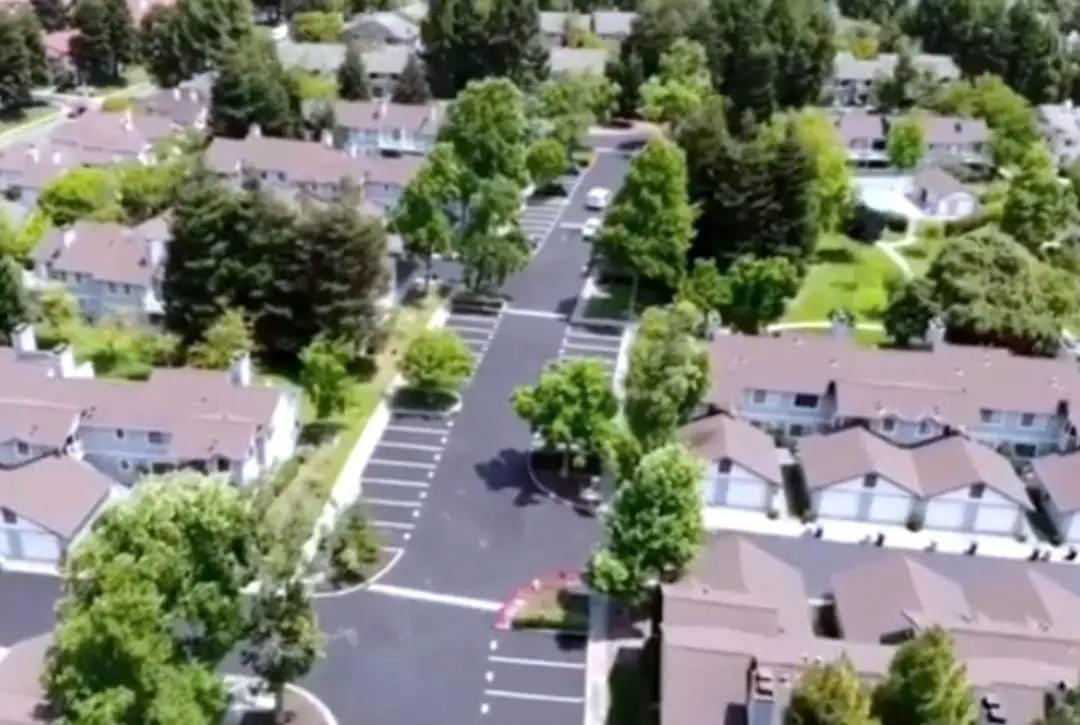
The savings come from timing. A seal coat costs much less than an overlay, and an overlay costs much less than removal and replacement, so every year the pavement stays out of the next stage is money saved. That only works on sound pavement, so repairs come first and protection second: at The Crossings HOA in Fremont, seal coat followed 34,500 SF of full-depth repairs.

Specification

How we build it

The details that decide service life, stated plainly so they can be compared against any other proposal you receive.

Cycle
Typically every 3–5 years, adjusted for traffic, weather and condition.
Material
Our preferred sealer is Reed & Graham's OverKote pavement sealer.
Crack preparation
Linear cracks up to 1/2 in filled with hot or cold crack fill before sealing.
Temperature
Above about 50°F, spring to early fall in the Bay Area.

Questions

Sealcoating FAQs

How often should a commercial lot be seal coated?

Most Bay Area asphalt should be seal coated every three to five years. A busy retail lot needs it sooner than a quiet office lot.

How long does a seal coat last?

On a typical Bay Area commercial lot, long enough to put you back on a three-to-five-year cycle. Traffic decides it: entrances, drive aisles and delivery lanes wear first, while parking stalls hold up far longer.

Is sealcoating worth it, or is it pointless?

On pavement that is still in good shape, yes. It's inexpensive compared with resurfacing and slows the damage that leads to cracking. It does little for pavement that has already failed.

Will seal coat fix our cracks?

It fills hairline cracks, but it won't fix potholes or failed pavement. We fill linear cracks before sealing and point out areas that need patching first.

How long after sealcoating can we drive on it?

Usually around 24 hours, depending on the product, temperature, humidity and shade. We release each area based on the conditions that day.

What happens if it rains after sealcoating?

Rain before the sealer has cured can wash it away or leave streaks, which may mean recoating. Once it has cured, rain won't harm it.

Get started

Need commercial sealcoating?

Send the property address and what you are seeing. An estimator will walk the site and tell you whether this is the right scope before quoting it.