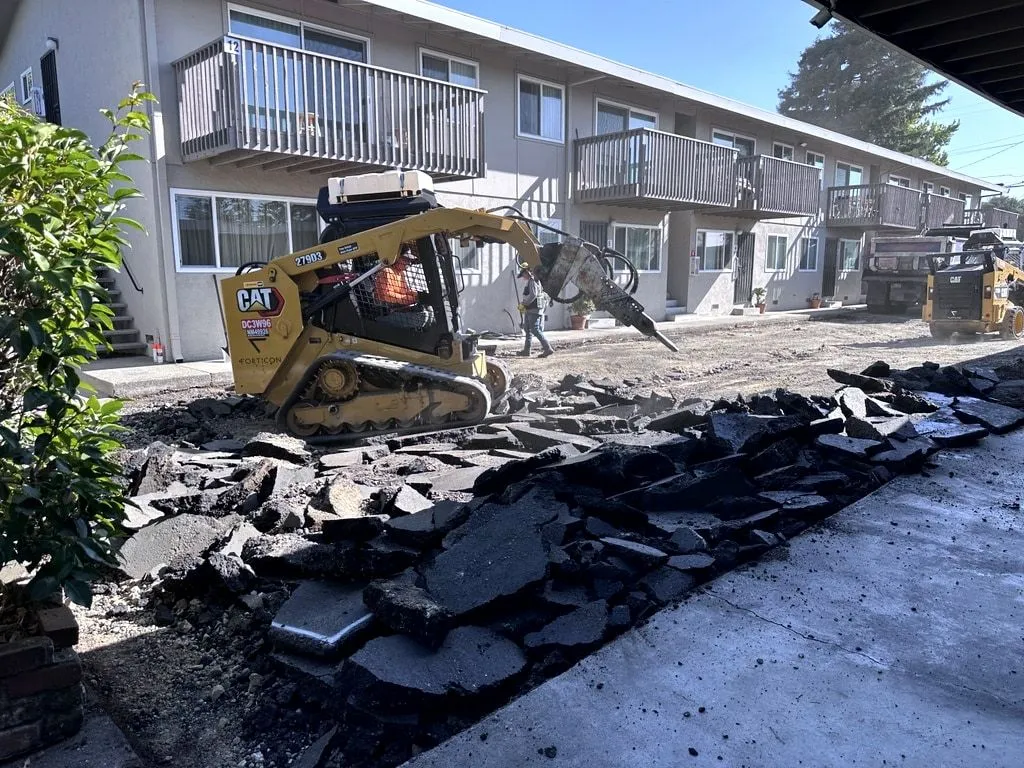
A skid steer with a breaker attachment breaking out old asphalt beside an apartment building, with the broken slabs piled along the edge.

Asphalt

Asphalt removal and replacement

Failed pavement taken out, the base corrected and new asphalt built to last, for lots that patching can no longer save.

In brief

Removal and replacement rebuilds a pavement from the base up. It is the right scope when the base has failed: interconnected alligator cracking, areas that flex under load, potholes that keep returning. When only the surface has worn out, an overlay or grind and pave costs less per square foot, and often only the failed areas need full-depth work.

On this page
  1. 01Is it the right fix?
    1. When pavement needs replacing
    2. Replacing only what needs replacing
  2. 02How the work is done
    1. How full-depth replacement is built
  3. 03Planning and cost
    1. Typical cost of removal and replacement
    2. What drives the cost of removal and replacement
    3. How long it takes, and keeping the property open
    4. What a replacement proposal should include

01

Is it the right fix?

When pavement needs replacing

Alligator cracking, areas that flex under a loaded vehicle and potholes that keep coming back all mean the base underneath has failed. An overlay on top won't fix that. The same cracks come back through the new asphalt, often within a few seasons.

The right choice depends on what is causing the damage, not on the age of the pavement. Most properties end up with a mix: replacement where the pavement has failed, and lighter treatment everywhere else.

  • Crack sealing and seal coat, for sound pavement that is faded or lightly cracked
  • Patching, for a few small failures in otherwise sound pavement
  • Resurfacing, for a worn surface across a wide area over a base that still carries load
  • Removal and replacement, for alligator cracking, flexing and returning potholes
Replacing only what needs replacing

Pavement rarely fails evenly, so full-depth replacement rarely needs to cover the whole property. Instead of replacing the entire paved area, we walk the site and mark out only the sections where the base has failed. Keeping the repairs to those localized areas can save a considerable amount compared with repaving the whole lot.

Where the damage comes from heavy loads sitting in one spot, like trash enclosure aprons and truck loading areas, replacing the asphalt with concrete can keep it from failing again.

02

How the work is done

How full-depth replacement is built

We sawcut around the failed area, then break out the old asphalt or mill it, depending on the width and size of the patches. Removed asphalt is then hauled to a recycler and reused as base rock or as RAP (recycled asphalt pavement) in new asphalt.

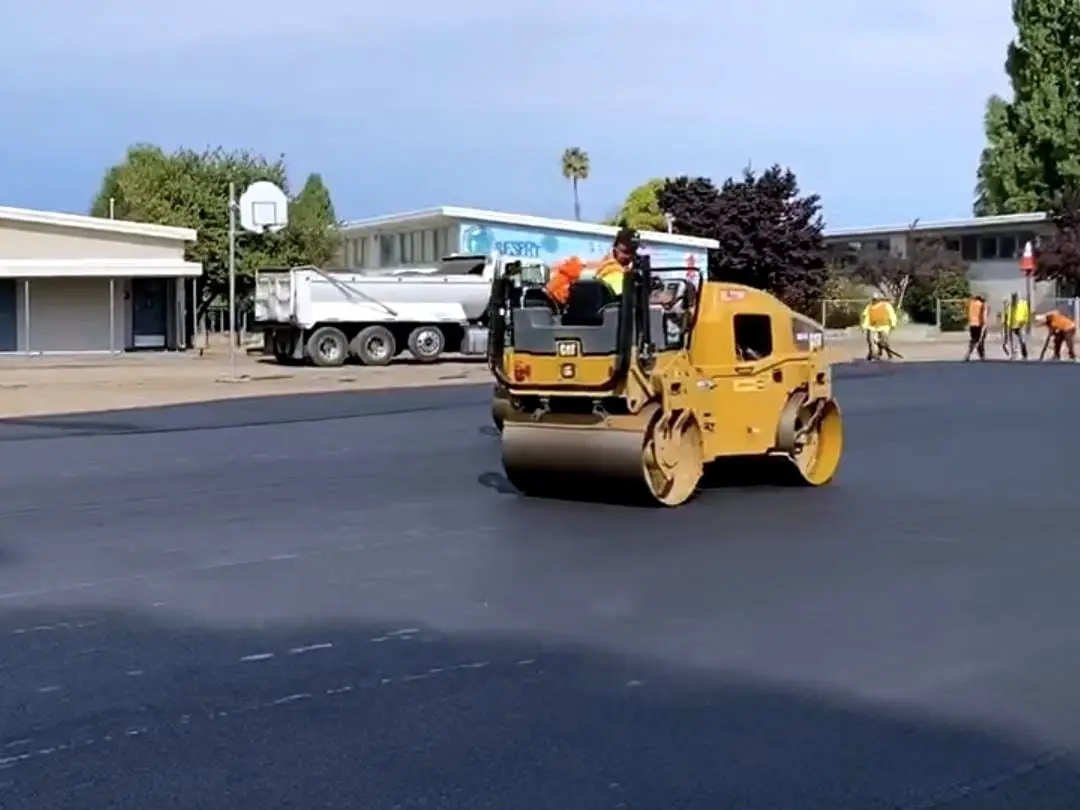
With the pavement out, we can see what is going on underneath. If the subgrade is soft, we tell you right away and price the fix before going further. At Longwood Elementary in Hayward, that meant cement and lime treatment before any paving, still inside the three-week schedule.

  • Sawcut and remove the failed section to a clean, straight edge
  • Check the base and subgrade, and correct anything that won't carry the load
  • Place and compact new aggregate base
  • Coat all adjoining surfaces with tack coat
  • Pave in lifts, compacting while the asphalt is hot
  • Match the new pavement flush to the pavement around it

03

Planning and cost

Typical cost of removal and replacement

On our published removal and replacement projects, completed in 2021 and 2022, the contract came to about $4.50 to $6.50 per square foot. At Bay Medical Co. in Brisbane, 27,790 SF replaced at 4 in and 6 in depths, with striping, came to $181,760, about $6.54/SF. At Future CDJR in Concord, more than 66,000 SF replaced over unstable subgrade, plus 57,000 SF of seal coat, came to $296,200, about $4.49/SF.

These are whole-contract values divided by the replaced area, so they include everything else in the job. Thicker sections and smaller areas cost more per square foot. Asphalt and fuel costs have also gone up since these jobs were priced, so a bid today will usually come in higher. Treat the range as a guide, not a quote.

What drives the cost of removal and replacement

Most of the difference in price from one site to the next comes from what is under the surface and how easy the site is to work on.

  • Area, and the depth of the new base and asphalt
  • Soft subgrade found once the old pavement is out
  • Haul-off and recycling of the removed material
  • Access and phasing on a property that stays open
  • Drainage, concrete and striping work at the same time
  • Asphalt and fuel prices at the time of the work

How long it takes, and keeping the property open

Time depends on area, depth, access and phasing. At Bay Medical Co. in Brisbane, 27,790 SF was removed and replaced in three days.

On occupied sites we work one area at a time and reopen each section once the new asphalt has cooled. Tenants or residents get notice of which areas close, when, and where to park in the meantime.

What a replacement proposal should include

Two bids for the same lot can describe very different work. A proposal you can compare should state:

  • The areas to be replaced, marked on a plan or on site
  • Removal depth, new base depth and asphalt thickness
  • How soft subgrade will be handled and priced if it is found
  • Haul-off, drainage corrections and restriping
  • What is excluded

Specification

How we build it

The details that decide service life, stated plainly so they can be compared against any other proposal you receive.

Typical depth
4 in is common for parking areas; 6 in where traffic requires it.
Edges
Sawcut to a clean vertical face so the new pavement locks against sound material.
Base
Checked and rebuilt as part of the work, never assumed to be sound.
Subgrade
Cement/lime treatment, or excavation and replacement, where the ground won't carry the load.
Reinstatement
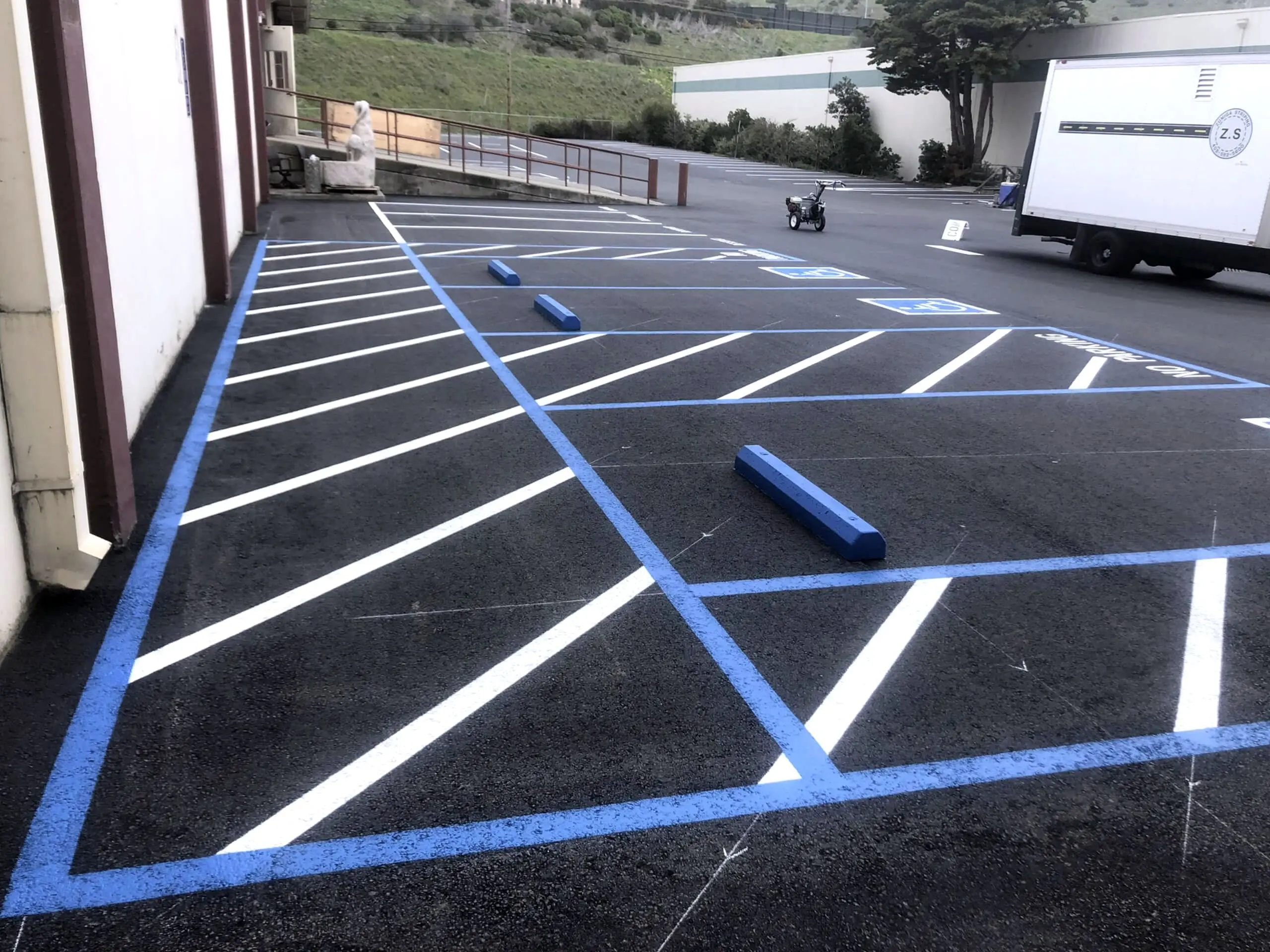
Striping, stall markings and signage put back to the approved layout.

Questions

Removal & Replacement FAQs

How do I know whether we need replacement or just repairs?

Look at the type of damage rather than the amount. Alligator cracking, areas that flex under load and potholes that keep coming back point to base failure, which needs full-depth work. Fading, loose stones on the surface and single straight cracks usually don't. We're happy to walk the site and show you the difference.

How much does asphalt removal and replacement cost?

It depends on the area, the depth of the new pavement, the ground found once the old pavement is out, haul-off, access and phasing. Replacing only the failed areas, rather than the whole lot, is usually the biggest single saving.

Is it cheaper to overlay than to replace?

Per square foot, yes, usually by a wide margin. But an overlay over a failed base usually lasts only a few seasons before the same cracks come back, and then you pay for the replacement anyway.

What is the most effective way to remove asphalt?

On commercial work, we sawcut the area, then break out the asphalt with an excavator or loader, or grind it off with a milling machine. Either way, the removed material is usually hauled for recycling.

How long will the replaced pavement last?

Full-depth pavement on a sound, well-drained base should give you many years of service, far longer than an overlay over failed pavement. Regular crack sealing and seal coat make a real difference.

Get started

Need asphalt removal and replacement?

Send the property address and what you are seeing. An estimator will walk the site and tell you whether this is the right scope before quoting it.