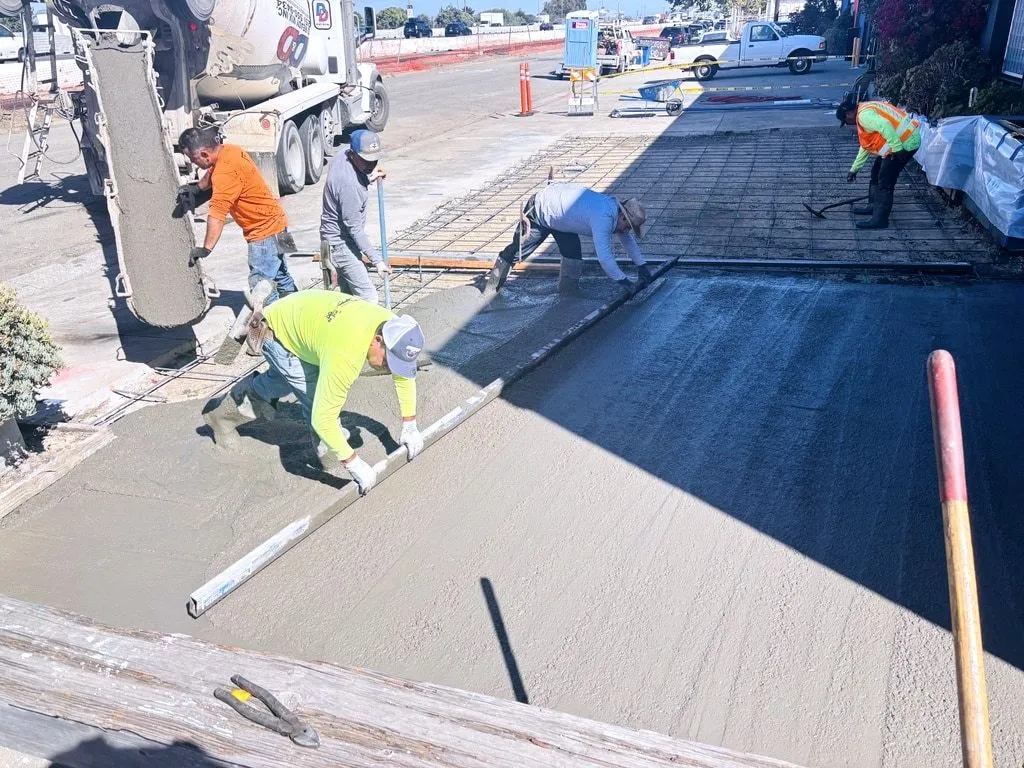
A Forticon crew screeding a new concrete ADA parking stall as the mixer truck pours alongside, with rebar mesh set in the next section.

Concrete

Commercial concrete repair

Sunken, lifted and broken sidewalks, curbs, walkways and parking stalls, including ADA stalls, replaced after we deal with whatever moved them.

In brief

Concrete repair replaces sunken, cracked or lifted panels after dealing with what moved them: tree roots, settlement, poor subgrade, missing joints or water under the slab. Panels are sawcut to joint lines and set flush with drainage fall maintained. Small lips on sound slabs can sometimes be ground down. In many Bay Area cities the owner is responsible for the sidewalk along the frontage.

On this page
  1. 01The basics
    1. Common types of concrete damage
    2. Trip hazards and sidewalk repair
  2. 02Is it the right fix?
    1. Repair or replace
  3. 03How the work is done
    1. How a concrete panel replacement is done
  4. 04Planning and cost
    1. Who is responsible for sidewalk repair
    2. What affects the cost of concrete repair

01

The basics

Common types of concrete damage

The cause decides the right repair. These are the conditions we see most on commercial sidewalks, walkways, curbs and stalls.

  • Panels lifted or dropped at a joint, leaving a trip hazard
  • Settled panels, where the ground beneath compacted or washed out
  • Cracks that widen, offset or break a panel into pieces
  • Tree roots pushing a panel up
  • Broken or displaced curb from vehicle strikes or settlement
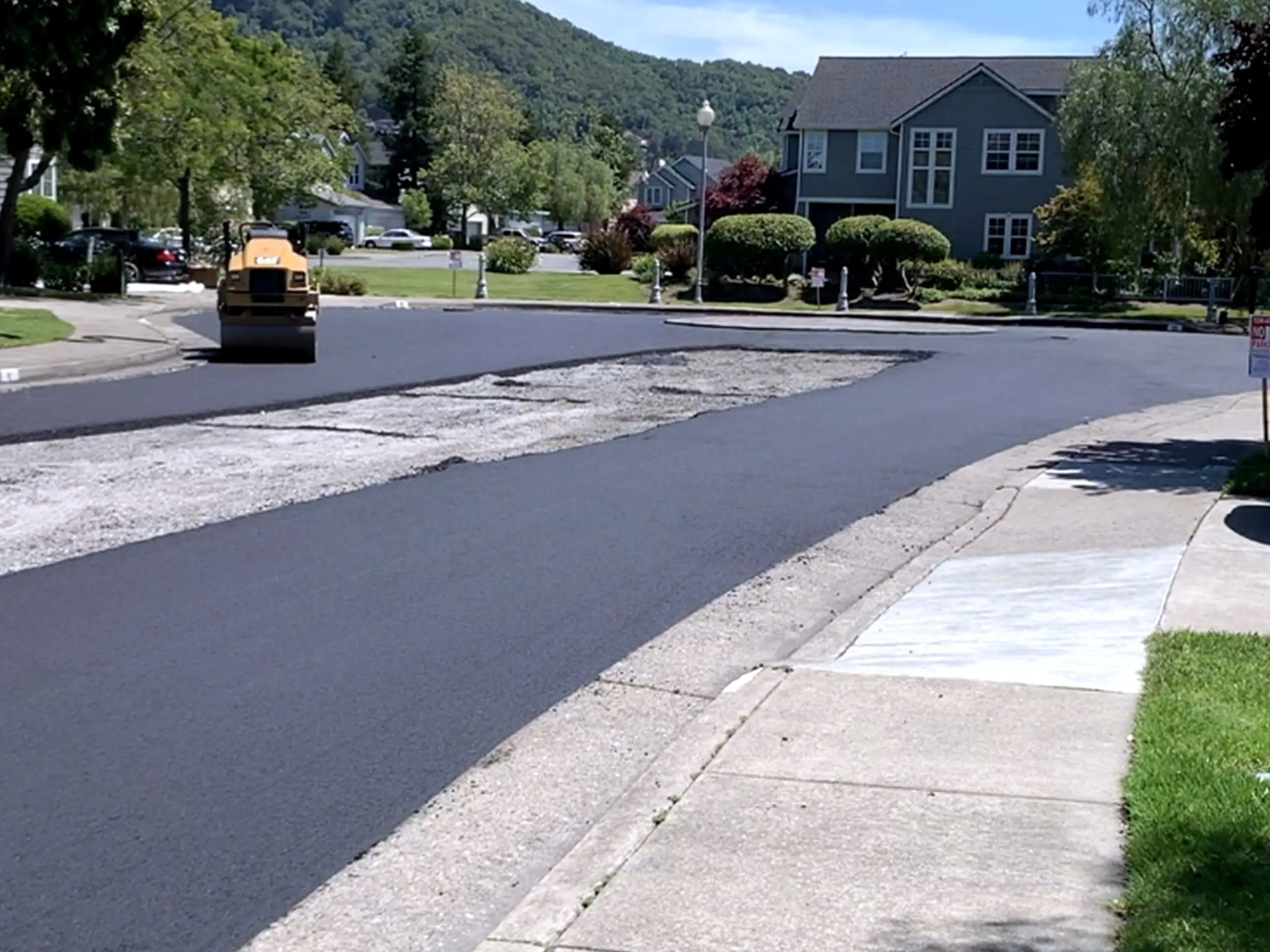
Trip hazards and sidewalk repair

On an accessible route, the tolerance is very small. Under the 2010 ADA Standards, a change in level of up to 1/4 inch can be vertical, and up to 1/2 inch if beveled. Anything larger has to be ramped or removed, so even a lip most people step over can need attention.

A panel that dropped will drop again if the ground or water path beneath it isn't fixed, so we find out why before we replace it.

02

Is it the right fix?

Repair or replace

Small lips on sound, stable concrete can often be ground down. Holes and broken edges can be patched where the surrounding concrete is sound. Panels that are broken, badly settled, lifted by roots or already patched once should be replaced. Main entrances and accessible paths of travel are where a it's worth doing the repair right.

03

How the work is done

How a concrete panel replacement is done

Whether it's one sidewalk panel, a parking stall or a run of curb and gutter, the steps are the same.

  • Sawcut on clean lines at the nearest joints and remove the broken concrete
  • Find and correct the cause, such as soft ground, a water path or roots
  • Replace and compact the base
  • Form, pour and finish to the correct level and slope
  • Cure and protect the area before reopening it

04

Planning and cost

Who is responsible for sidewalk repair

Many Bay Area cities make the adjacent property owner responsible for the sidewalk along their frontage, and some send repair notices after an inspection or complaint. Work in the public right-of-way needs a city permit and has to be built to the city's standard. Rules vary, so check with your public works department; if you've received a notice, talk to us. Permit fees are not included in our proposals, but we work with you to obtain the permit and can help with drawings.

What affects the cost of concrete repair

Grouping repairs into one project usually costs less rather than calling a contractor out for each panel.

  • The repair method, from grinding a lip to full replacement
  • The area and number of separate locations
  • Demolition, haul-off and base replacement
  • Root work around trees
  • Traffic control and inspections in the public right-of-way

Specification

How we build it

The details that decide service life, stated plainly so they can be compared against any other proposal you receive.

Cause first
Roots, subgrade, water tracking or jointing addressed before the panel is replaced.
Panel replacement
Sawcut to joint lines so the repair reads as part of the original flatwork.
Levels
Restored flush with adjacent panels, with fall maintained for drainage.
Accessible routes
Cross slope and running slope checked where the repair forms part of a path of travel.
Curb repair
Damaged sections replaced and re-tied to the gutter line so runoff still moves.

Questions

Concrete Repair FAQs

Can a trip hazard be ground down instead of replaced?

Sometimes, for small level differences on a sound slab. Where the panel has cracked or settled, or whatever moved it is still at work, the lip comes back.

Who is responsible for repairing the sidewalk in front of a commercial property?

In many Bay Area cities, the adjacent property owner is, even though the sidewalk is in the public right-of-way. Confirm with your city's public works department.

Tree roots lifted our sidewalk. Will it just happen again?

It can, if the roots are left as they were. A good repair deals with the roots as well as the concrete.

How soon can a repaired walkway be used?

Grinding reopens almost immediately. Replaced concrete needs to cure, and foot traffic usually returns well before vehicles. We can phase repairs so entrances stay open.

Will the new concrete match the old?

New concrete is lighter at first and tones in over time. Cutting to the existing joint lines keeps the repair looking clean rather than patched.

Get started

Need commercial concrete repair?

Send the property address and what you are seeing. An estimator will walk the site and tell you whether this is the right scope before quoting it.