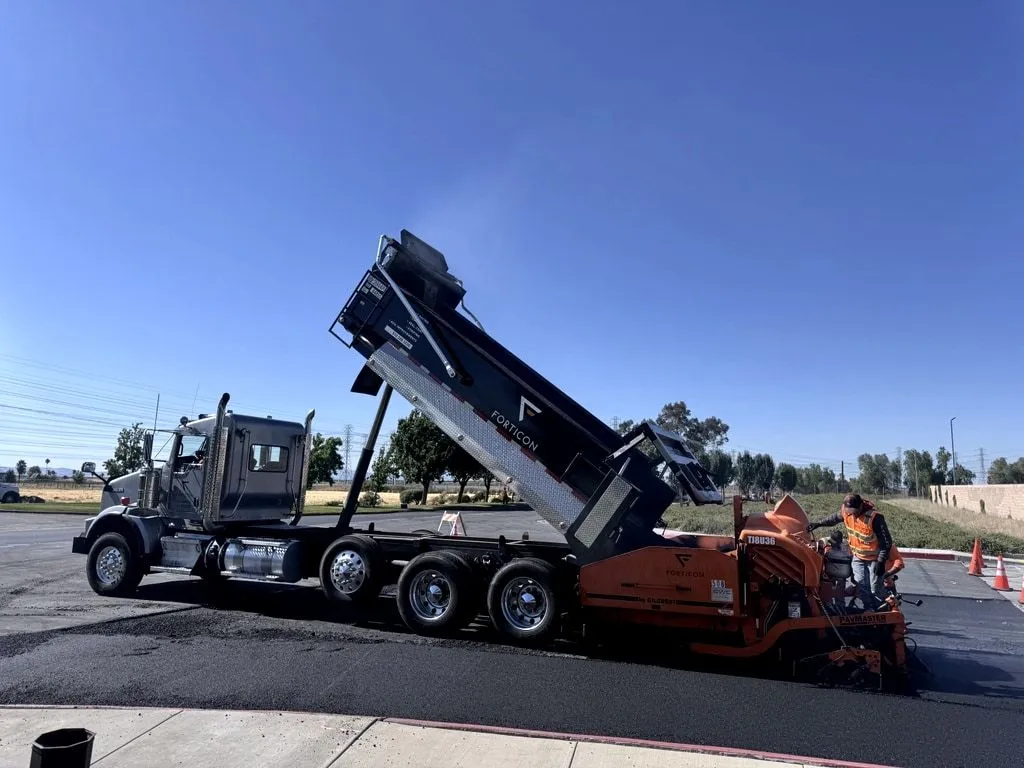
A Forticon dump truck with its bed raised, feeding hot-mix asphalt to the paver as the crew lays a new mat.

Asphalt

Commercial asphalt paving contractor

New parking lots, drive aisles and roads, built from the ground up with quality base rock and careful compaction.

In brief

New commercial asphalt paving builds a parking lot, drive aisle or road from the ground up: the subgrade is checked and treated where needed, quality base rock is placed and compacted, and hot-mix asphalt goes down in lifts and is rolled while hot. A well-built, maintained lot commonly lasts fifteen to twenty years or more.

On this page
  1. 01The basics
    1. What a commercial asphalt paving project includes
  2. 02Is it the right fix?
    1. Asphalt or concrete?
  3. 03How the work is done
    1. Subgrade and base rock
    2. Asphalt mix, lifts and compaction
  4. 04Planning and cost
    1. What drives the cost of asphalt paving
    2. Scheduling, weather and occupied sites
  5. 05Making it last
    1. How long new asphalt lasts

01

The basics

What a commercial asphalt paving project includes

Asphalt paving means building new pavement from the ground up: prepared ground, a compacted aggregate base and hot-mix asphalt on top. That is different from resurfacing, which goes over existing pavement, and removal and replacement, which rebuilds pavement that has failed.

On a commercial site, the paving usually comes with grading, drainage, concrete curb and gutter, accessible parking and striping. We handle that work too, so the grades and transitions are planned together.

  • Grading and excavation to subgrade
  • Treating or replacing soft ground
  • Aggregate base placed, graded and compacted to specified depth
  • Hot-mix asphalt placed in lifts and compacted
  • Grades set so water drains to the catch basins
02

Is it the right fix?

Asphalt or concrete?

Asphalt usually costs less to install, opens to traffic sooner and is easier to repair, which is why most parking lots and private roads are asphalt. Concrete fits where heavy loads sit in one spot, like trash enclosure aprons and truck loading areas. Many sites use both, we build the concrete sitework first then we take care of the paving.

03

How the work is done

Subgrade and base rock

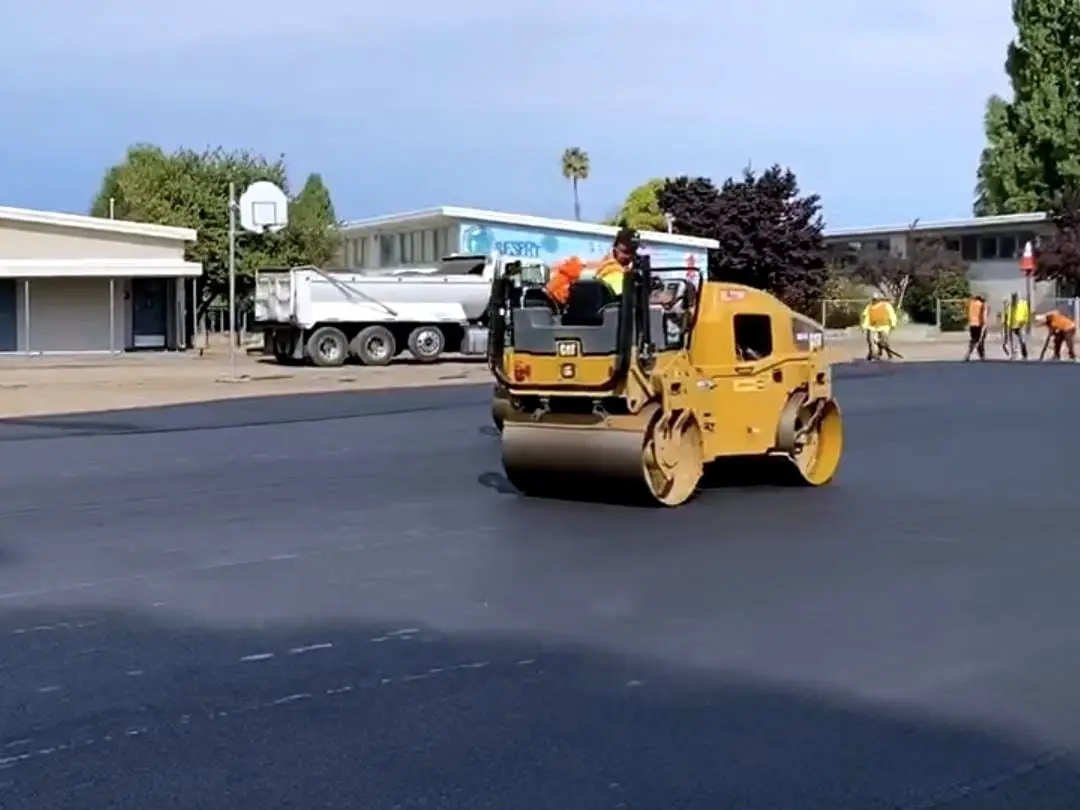
Everything sits on the subgrade, the native ground underneath. If it is soft or wet, more asphalt won't fix it; the pavement will flex and crack from the bottom up. We treat soft ground with cement or lime, or dig it out and replace it, as we did at Longwood Elementary in Hayward.

On top of that goes the aggregate base, which spreads wheel loads and gives the asphalt a stable platform. Base rock that is poorly compacted or is under the recommended standard depth for the traffic load shows up a few years later as cracking and potholes. The base depth is written into our proposal.

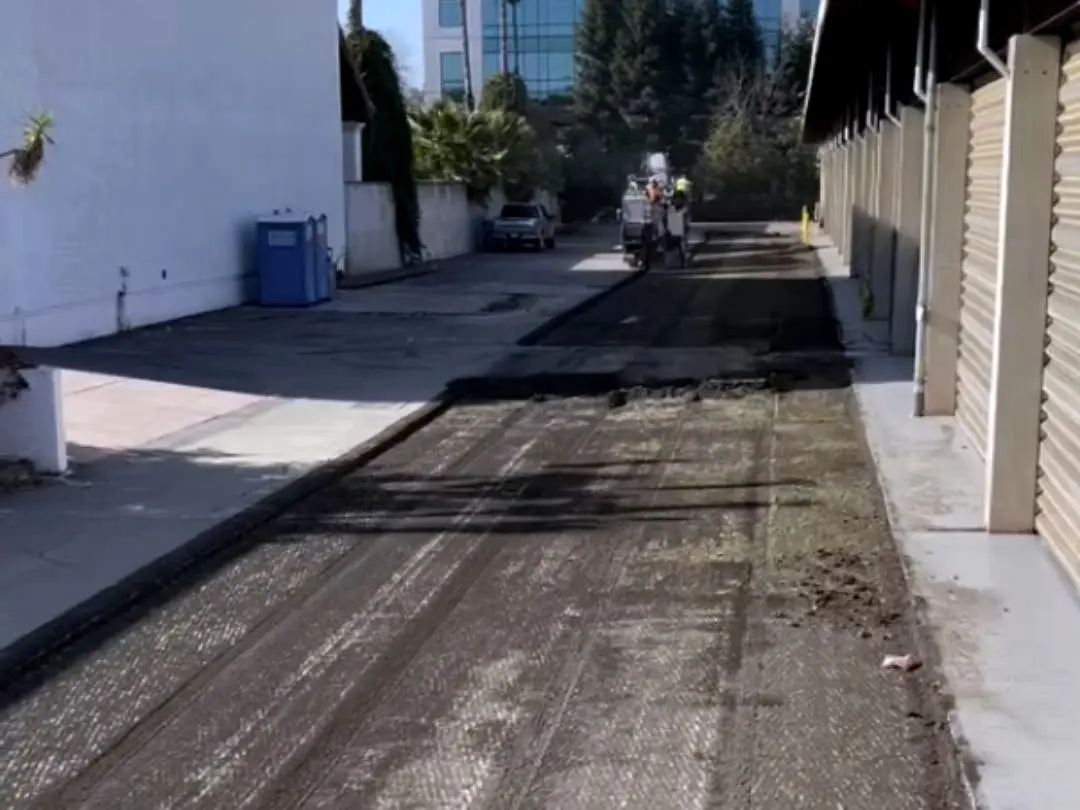
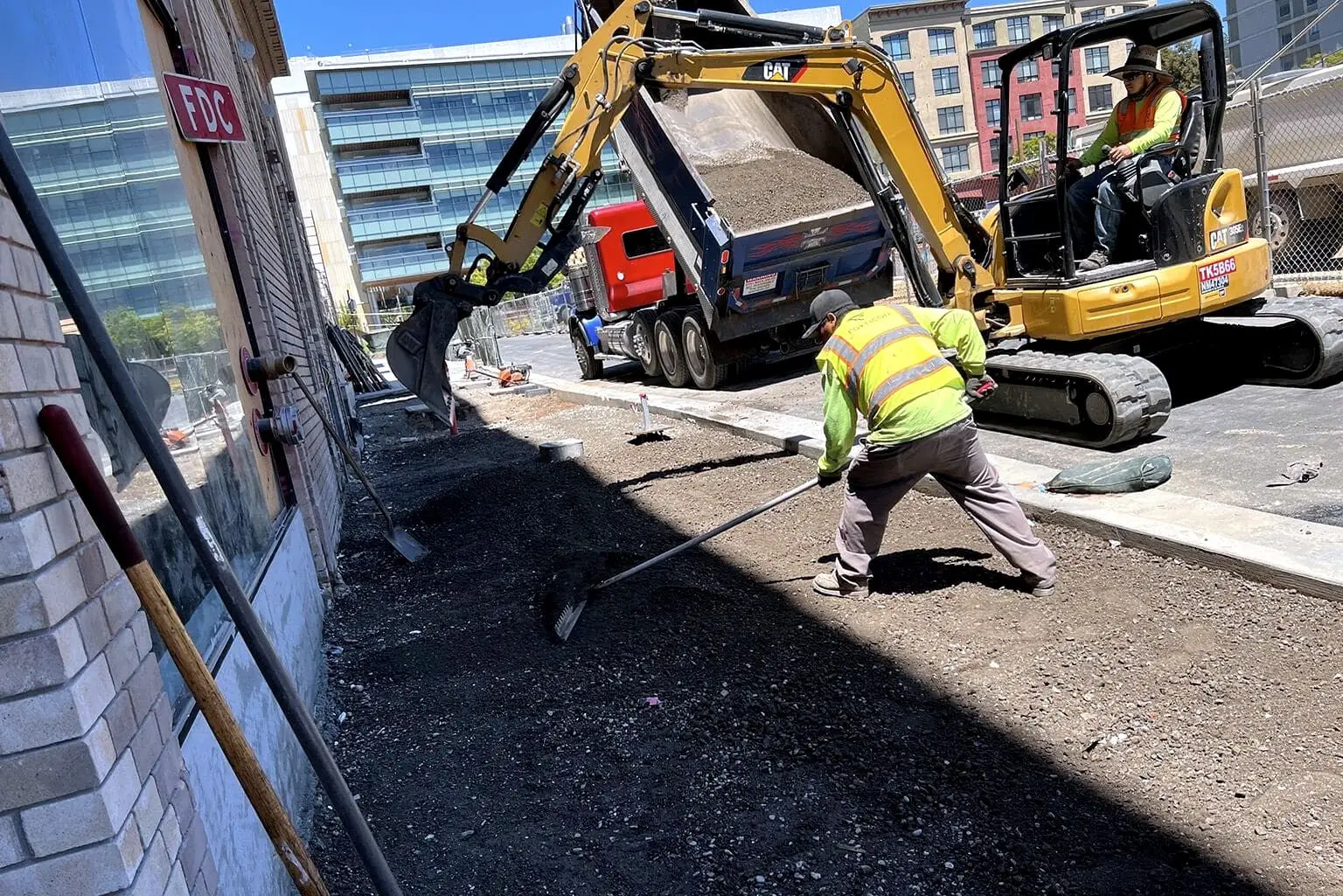
Excavation and aggregate base rock preparation ahead of new asphalt paving.

Asphalt mix, lifts and compaction

Hot-mix asphalt is placed in layers called lifts and has to be rolled while it is still hot. Rolled too late, it won't get dense enough and lets water in, so we plan truck deliveries so the material arrives at the right temperature. We name the mix in the proposal instead of just writing "asphalt."

Grades are set so water flows to the catch basins without ponding, and new asphalt is matched flush where it meets concrete, existing pavement and utility covers.

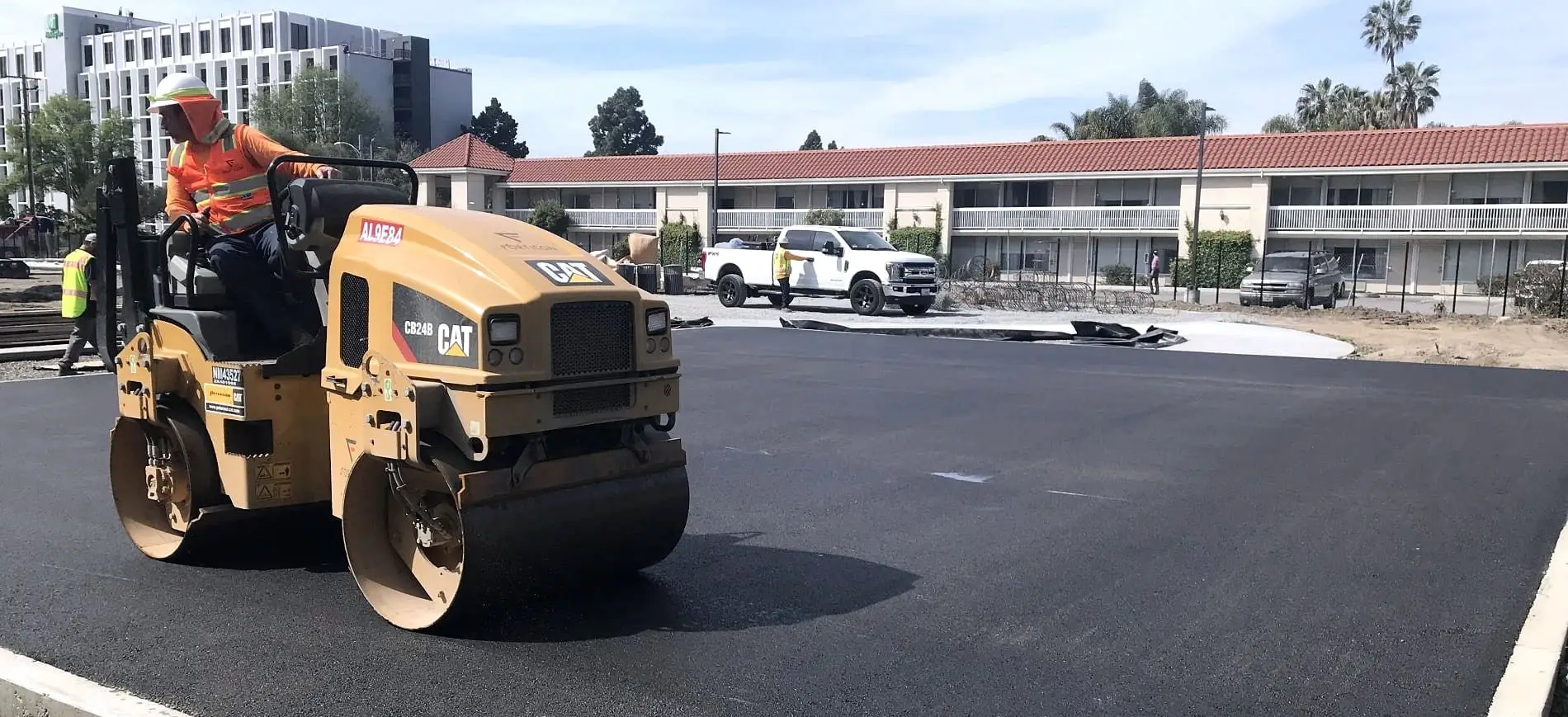
A roller compacting a newly placed asphalt mat on a Bay Area commercial site.

04

Planning and cost

What drives the cost of asphalt paving

A single per-square-foot price won't hold from one site to the next. The main factors:

  • Area and pavement thickness
  • Subgrade condition and any soft ground found
  • Demolition, grading, drainage and haul-off
  • Access and phasing on a property that stays open
  • Concrete, striping and accessibility work in the same project
  • Asphalt and fuel prices at the time of the work

Scheduling, weather and occupied sites

The paving itself goes quickly; preparation takes the time. A small area on a ready base can be placed in a partial day, while a site that needs demolition, grading and new base can take several days. Most Bay Area paving happens between spring and early fall, because asphalt can't go down in the rain or on a wet base.

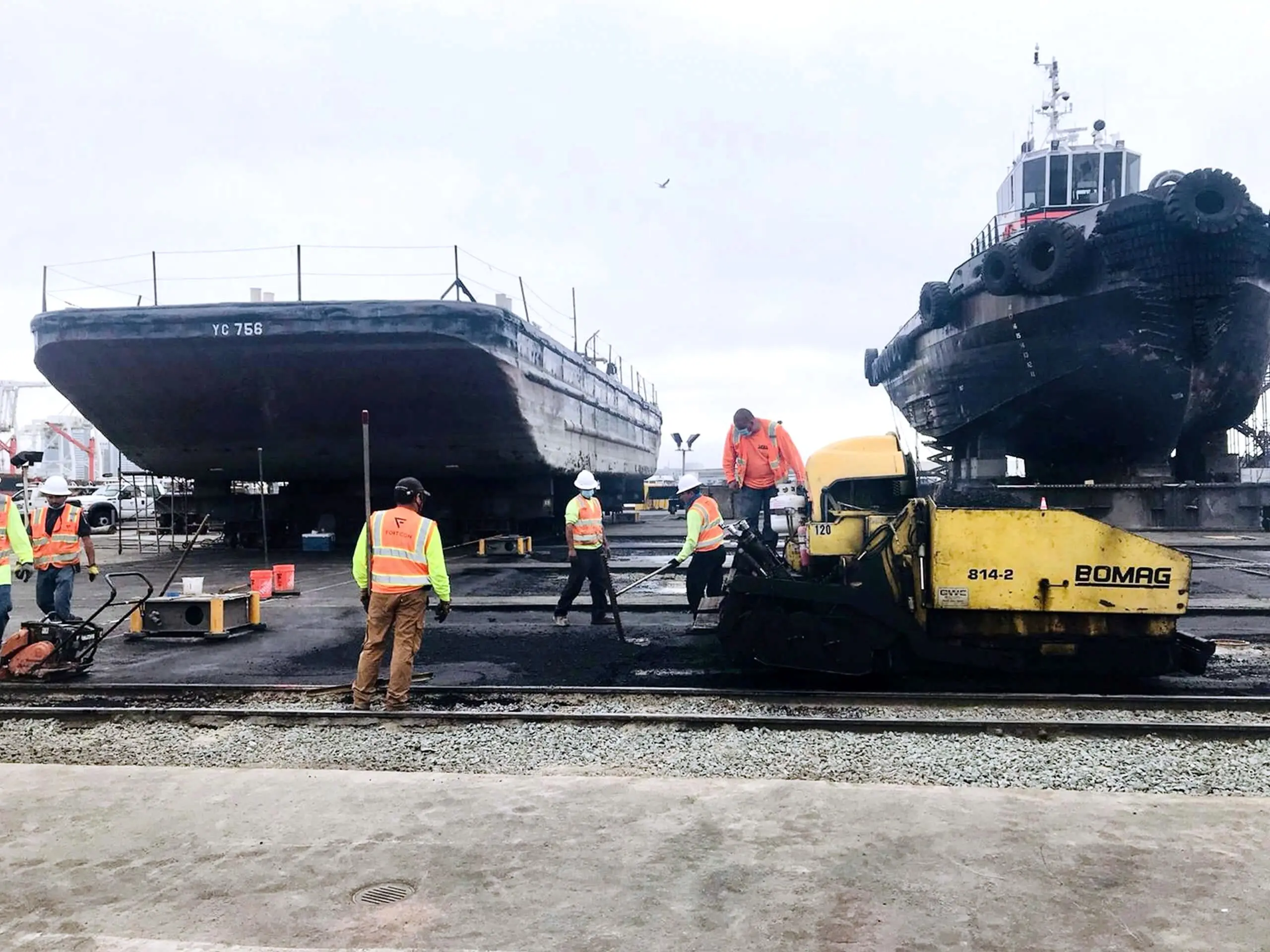
Most commercial paving happens on property that is in use. We phase the work so parking, deliveries and emergency access stay open, and occupants know which areas close and when. At Bay Ship Co. in Alameda, we planned around a working shipyard and finished in a week.

05

Making it last

How long new asphalt lasts

A well-built, maintained commercial lot commonly lasts fifteen to twenty years or more before it needs major work. Drainage, traffic and, above all, maintenance decide where in that range it lands. Seal cracks as they appear, plan a first seal coat within the first few years, then every three to five years after that.

Specification

How we build it

The details that decide service life, stated plainly so they can be compared against any other proposal you receive.

Subgrade
Checked before paving; treated with cement/lime, or dug out and replaced, where needed.
Aggregate base
Quality, appropriately sized base rock placed and compacted at a stated depth.
Mix
Hot-mix asphalt named in the proposal; stone size and binder per the project or agency specification.
Lifts
Built up in multiple lifts where the pavement is too deep to compact evenly in one pass.
Compaction
Rolled while hot; truck deliveries planned so material arrives at the right temperature.

Questions

Asphalt Paving FAQs

How thick should new commercial asphalt be?

It depends on the traffic, the ground underneath and the base rock supporting it. A car parking area and a truck route often need different depths, and how long the pavement lasts depends more on what is underneath than on the asphalt alone.

How long before we can drive on new asphalt?

Usually once it has cooled enough not to mark, often the same day or the next. Your project manager will confirm the timing on the day.

How long does a new asphalt parking lot last?

A properly built and maintained lot commonly lasts fifteen to twenty years or more. Poor drainage, a weak base, heavy trucks and skipped maintenance all shorten that.

Can asphalt be laid directly on dirt?

It can be, but we don't recommend it on a commercial site. Without a compacted aggregate base, traffic loads go straight into the soil and the asphalt cracks and ruts early.

What is the difference between paving and resurfacing?

Paving builds new pavement from the ground up. Resurfacing places new asphalt over an existing surface that is still structurally sound. It costs less, but it won't fix a failed base.

Do you handle grading and excavation as well?

Yes. Grading, subgrade preparation and base rock are part of our paving work, so you don't need a separate contractor.

Get started

Need a commercial asphalt paving contractor?

Send the property address and what you are seeing. An estimator will walk the site and tell you whether this is the right scope before quoting it.